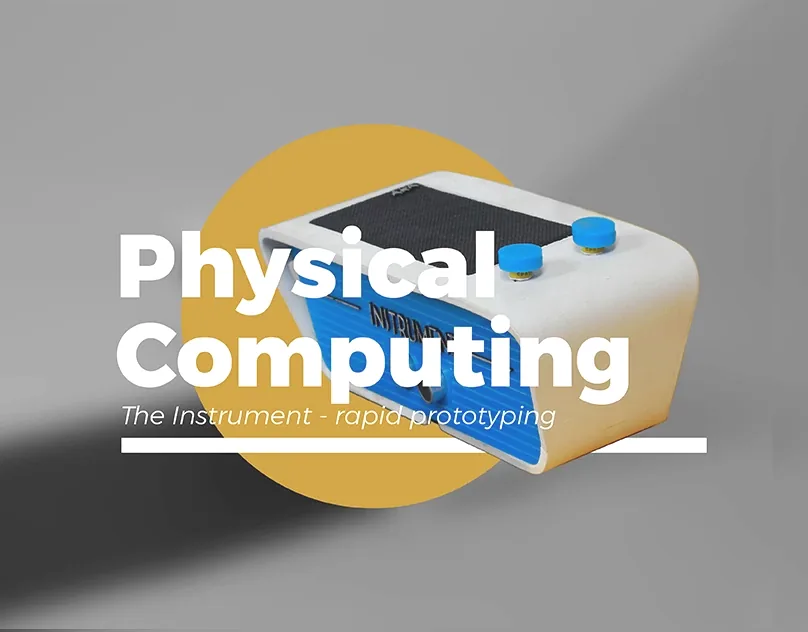
Learning by making
Before I could argue about interaction on a screen, I wanted to feel it in my hands. This is a cluster of small physical-computing experiments from NID in 2017, made to learn one thing: how to get code, sensors, and the physical world to react to a person. None of these is a product. Together they are the record of teaching myself the interaction stack from the ground up.
The Instrument
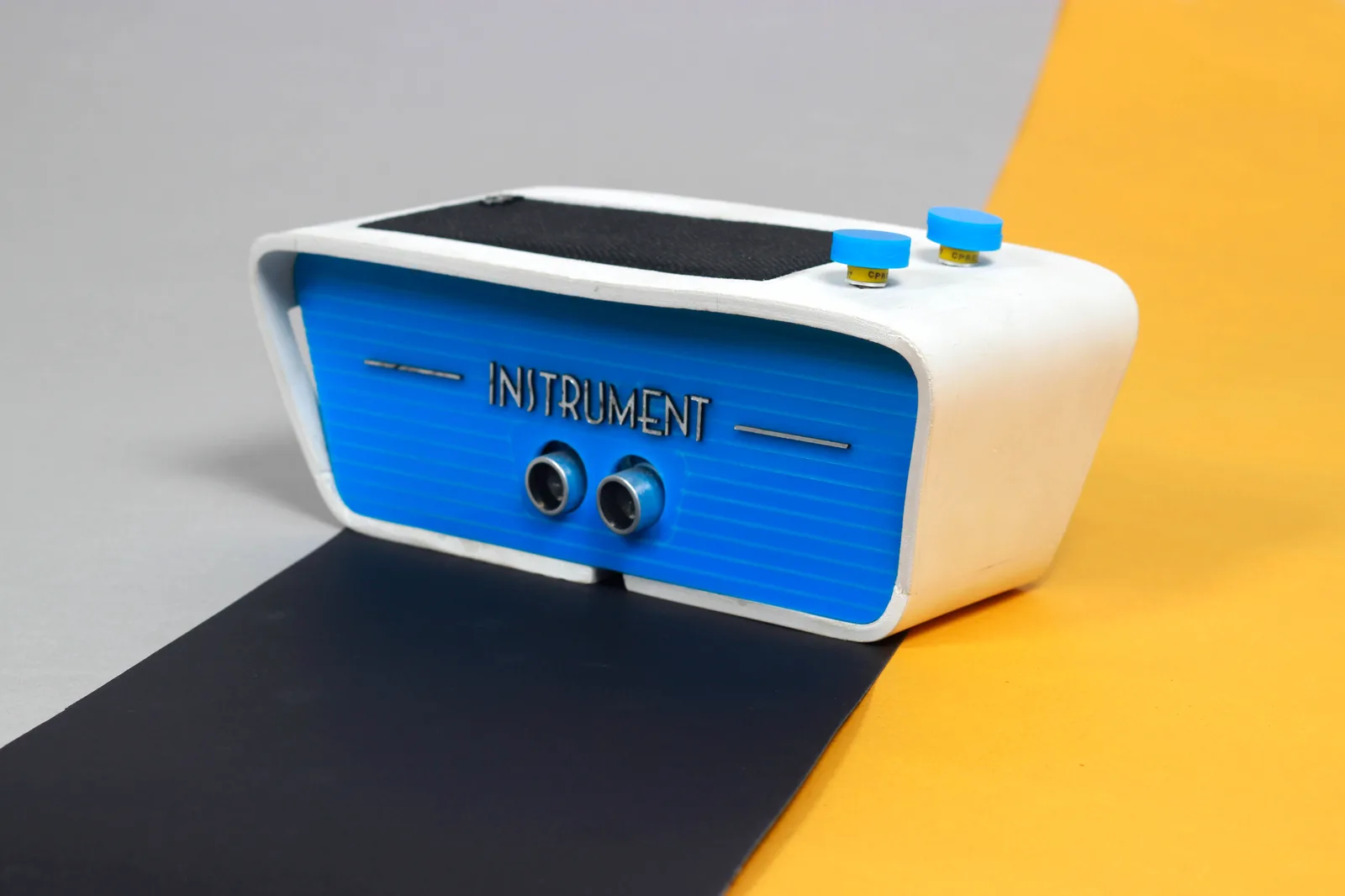
The centrepiece is a small instrument you play without touching it. Move a hand above it and the distance becomes sound; move it differently and the sound changes. An ultrasonic sensor reads how far your hand is, and that reading drives the tone, with a few selectable modes so the same object plays more than one way.
The point of it was never the sound it made. The point was the loop: a physical gesture goes in, code interprets it, and something comes back out, all in real time. Getting that loop to feel immediate, with no lag between the hand and the sound, is the whole craft of interaction in miniature. It is the first time I understood latency as a feeling rather than a number.
Dome projection
The second piece pushed pixels instead of sound. A Processing sketch that renders its scene for a full spherical dome, the kind used in a planetarium, by mapping the view onto a cube and reprojecting it. I built it on top of an open full-dome template by Christopher Warnow rather than from scratch, which is worth saying plainly: the value I added was understanding the projection math well enough to drive my own content through it, a mouse-controlled scene warped correctly onto a curved surface.
The trail underneath
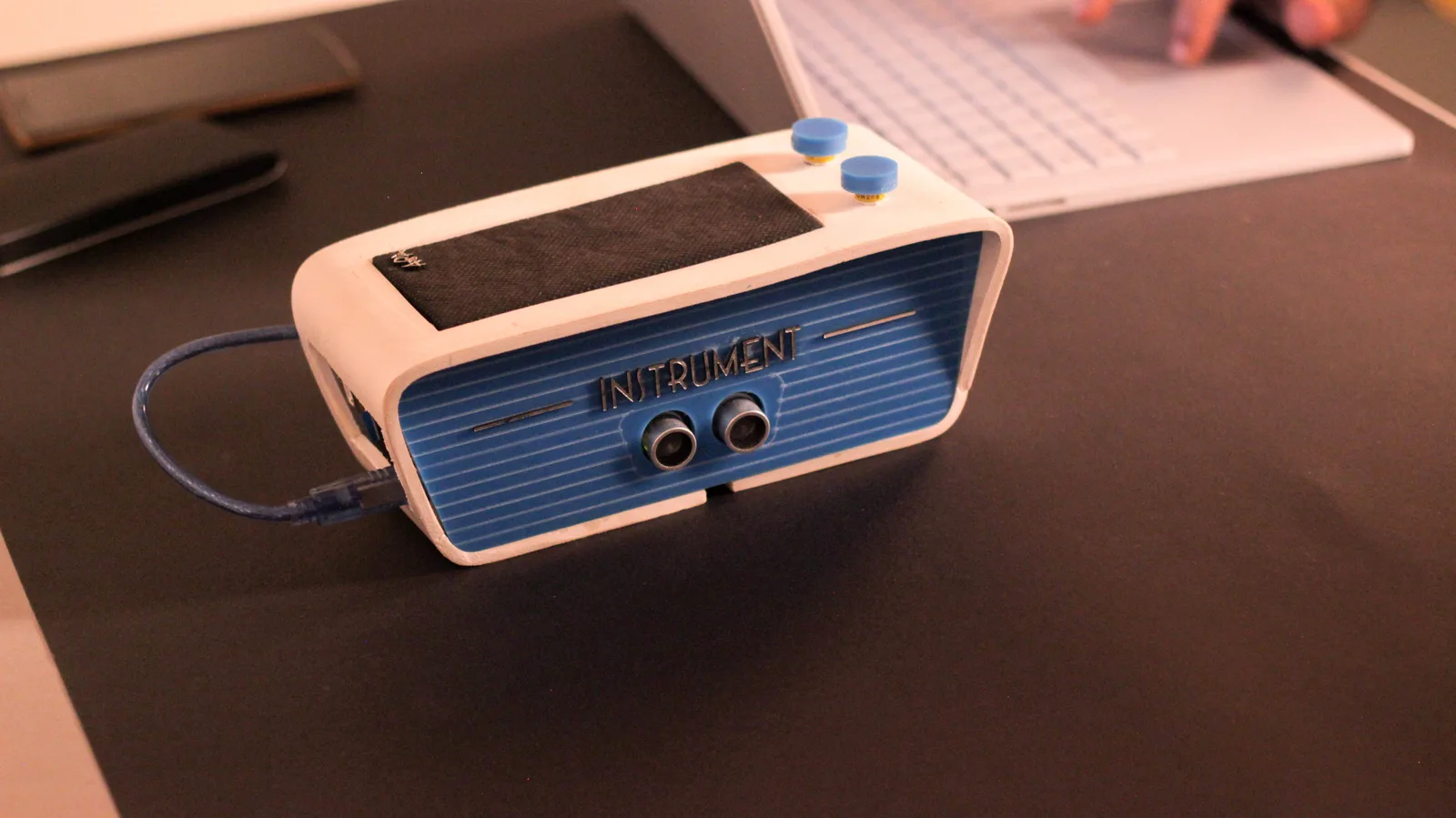
The rest of the folder is the honest scaffolding of a beginner. A well-worn copy of Brian Evans’ Arduino Programming Notebook, which taught me the language and which I am crediting because it is his, not mine. Tim Eckel’s NewPing library for the ultrasonic sensor, used as intended. Processing sketches, a DSLR, a teaser cut in Premiere. The tools were borrowed; the learning was earned.
What it taught me
This is the earliest work in my portfolio and I keep it for a reason. Making things react taught me to think with my hands, to treat latency and feedback as things you feel, and to be exact about what I built versus what I stood on top of. Everything I have designed since sits on this: the belief that the fastest way to understand an interaction is to build a rough one and hold it.