The moment on the bus
The bus is full, the fare is fourteen rupees, and the rider has a five hundred rupee note. The conductor does not have change. He shrugs, or he waves the rider on, or he promises to settle up later and never does. Multiply that small friction across a city of buses and it stops being small. People feel cheated. They start to believe the system is quietly corrupt. And a service that millions depend on loses the trust it runs on.
The problem
I went looking for the loudest complaint and found change. In the field, roughly eight in ten commuters raised the lack of change with the conductor, and the feeling that followed was being cheated. That is a trust problem wearing the costume of a coin shortage.
Around it sat the rest of the experience. Wayfinding was arduous: no reliable way to know a stop was ahead, constant juggling between apps. The official app was worse than nothing at peak, unable to handle live information and prone to crashing. And the adoption cost of all this was visible in one statistic: of roughly 87 lakh people in Bengaluru, only about 5 lakh were using BMTC, which is a direct contributor to the traffic everyone complains about.
The research
I rode the routes and logged what I saw: no fixed stopping points, poor lighting, marketing pasted over route information at night, peak crowding well past capacity, stops that were not friendly to anyone with a disability. I walked the official app through its own tasks and wrote down where it broke. Around thirty captioned field observations, plus secondary research on cashless payments, smart cards, and conductor-less buses.
Then I did the part I am still fond of. I told the whole problem as a comic. Three short chapters set on one bus, following a new conductor out of change, an office worker with only a five hundred note, and a common man who quietly pays a stranger’s fare. The three stories converge on the same missed-change moment. It turned a folder of statistics into something a person feels in one read, and it kept the design honest about who it was for.
The design
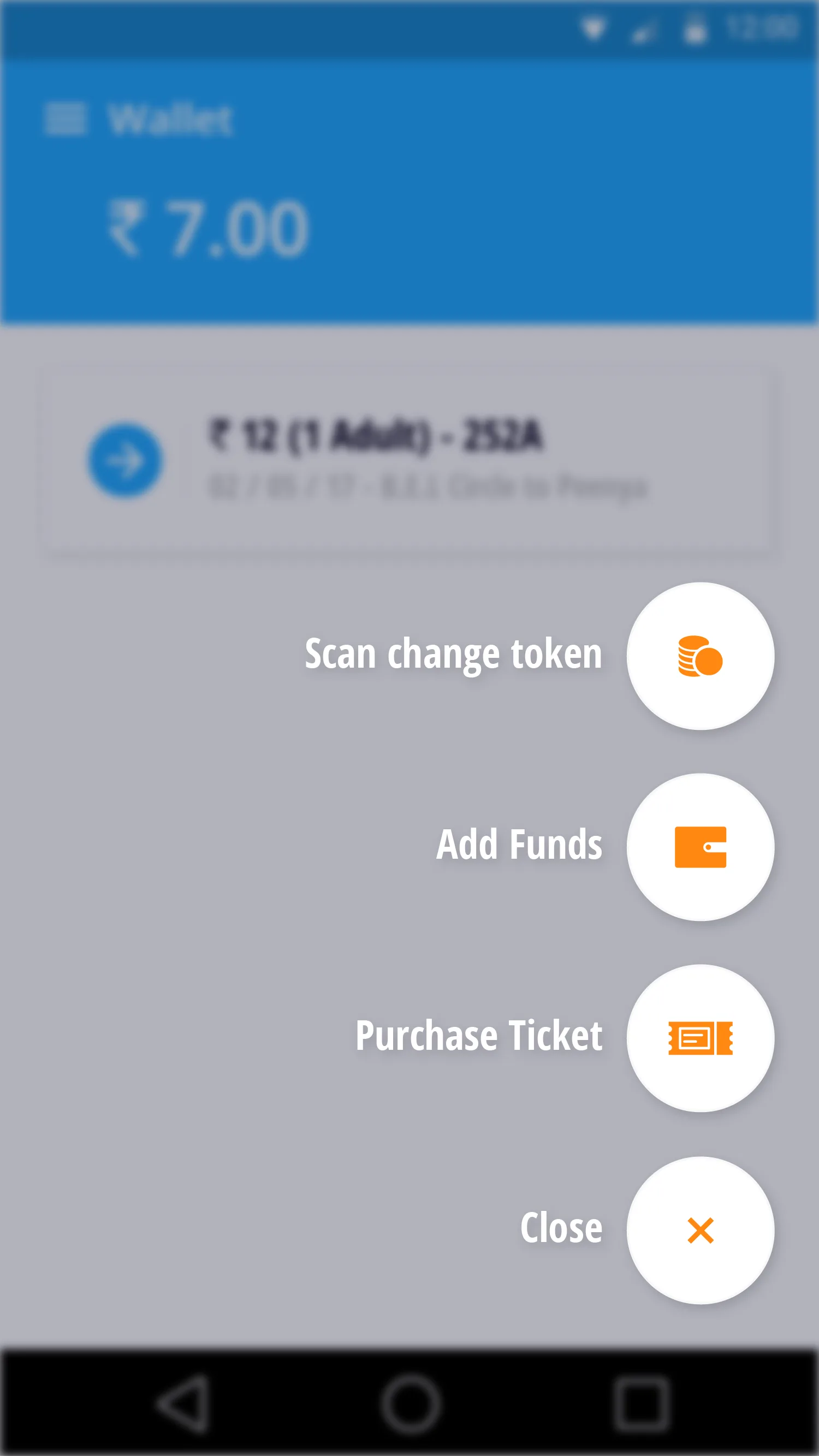
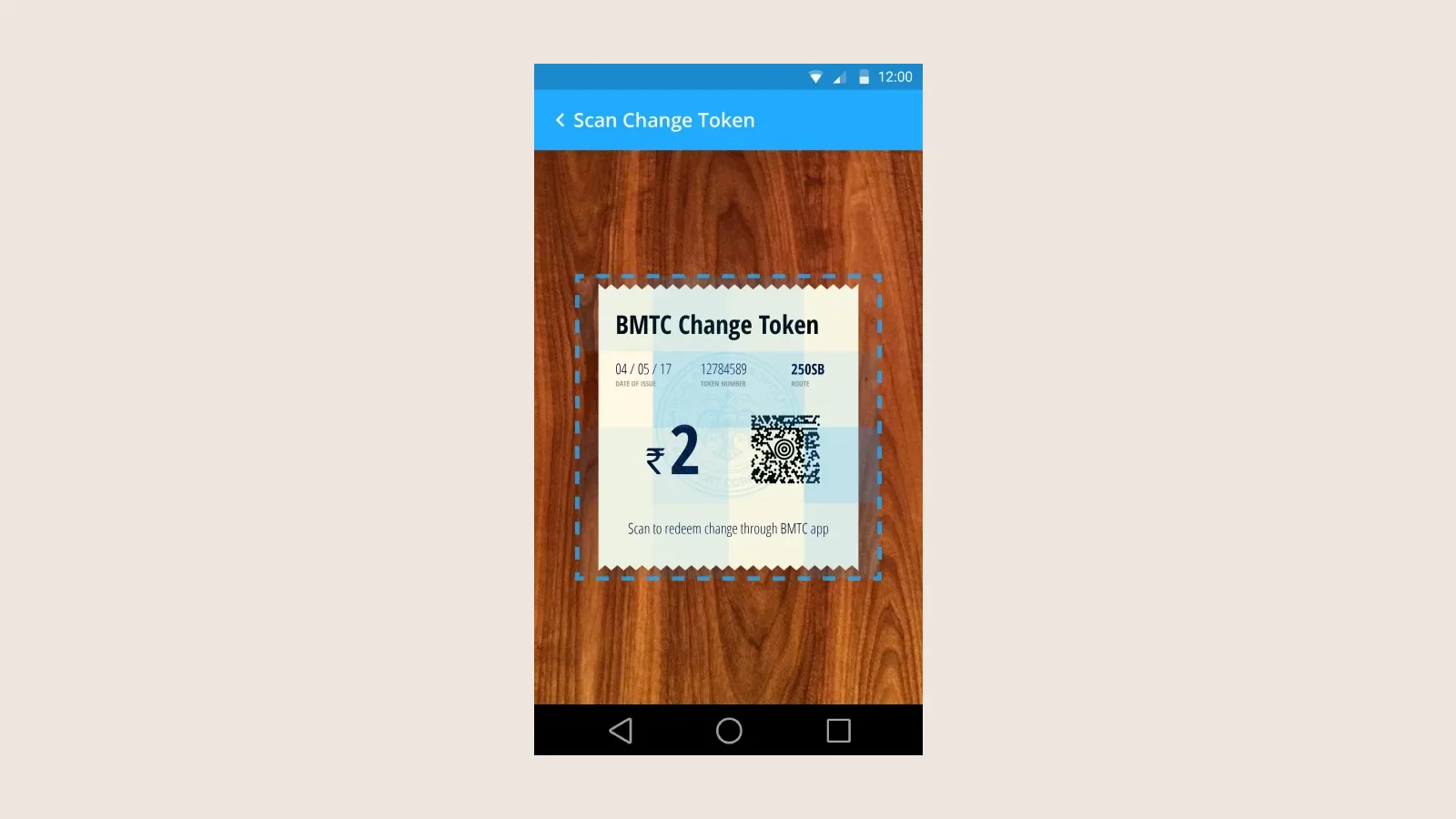
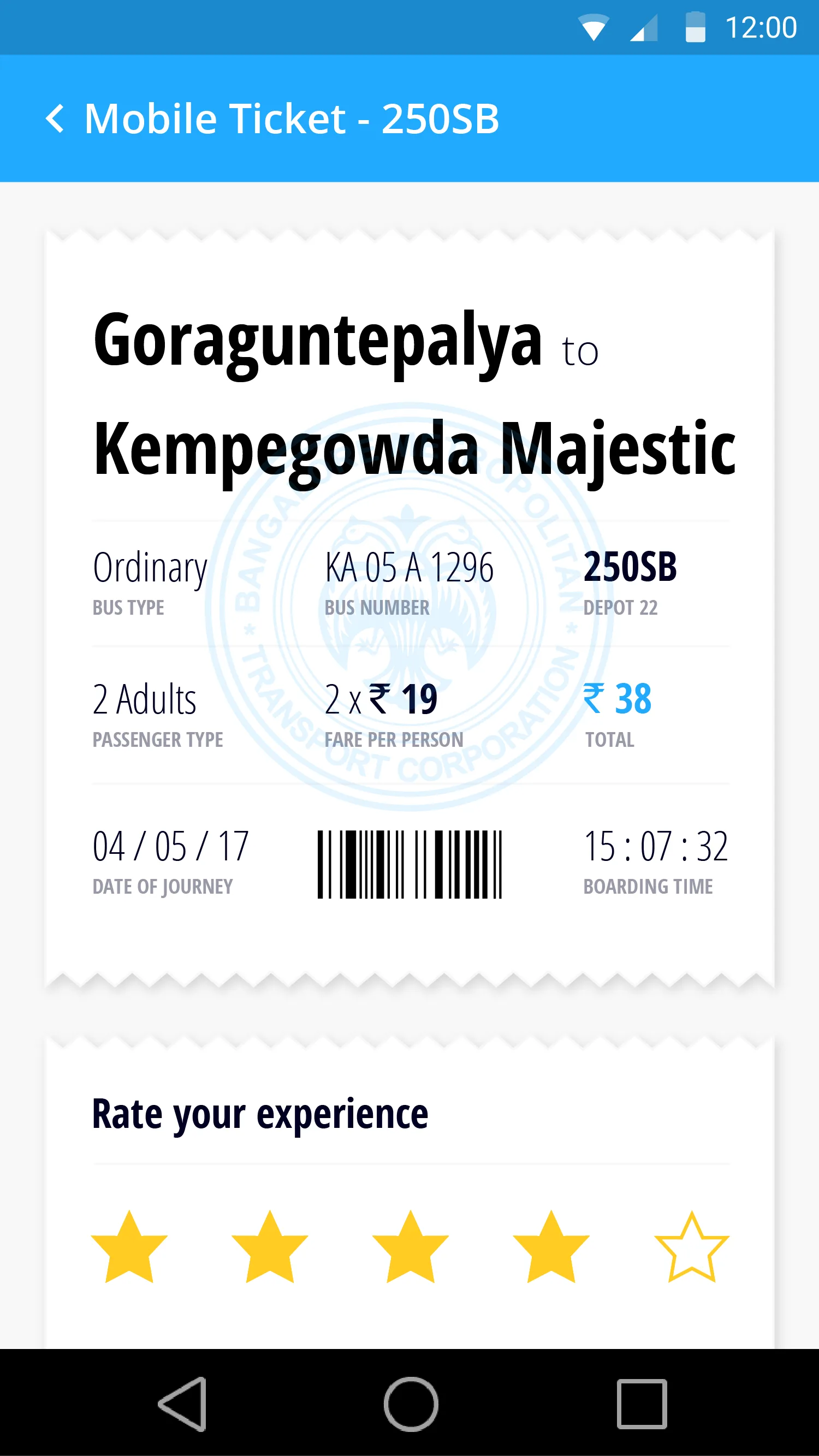
One insight carried the concept: if the machine cannot give you change, let it give you a claim on that change. So the redesigned electronic ticketing machine, when it cannot make change, prints a small barcoded token. The rider scans it into a BMTC wallet in the app, or redeems it on the next bus. Nobody walks away short. The trust problem gets a mechanical answer.
The rest followed from there. The machine gained GPS, offline ticketing, and card, NFC, and cash payment in one device. The app was rebuilt around the wallet: in-app and QR payment, live location and better routing, split fares, passes, and a reason to prefer the bus. Fares could be subsidised by advertising, and the transaction data could quietly make the network smarter.
Where it stopped
I will not overstate it. The project ends at a defined MVP: the insight, the token flow, the machine spec, and the app screens. There was no user testing, no iteration on a real deployment, no outcome to report. BMTC has since shipped its own apps and cards, so this is a 2017 student concept, not a live product.
What it taught me
BMTC taught me to hunt for the one lever. A messy civic problem with a dozen symptoms usually has a single honest fix that earns the most trust for the least change, and the job is to find it and build the rest around it. It also taught me that a comic can do what a slide deck cannot: make a stranger care about a fourteen rupee fare.