The student about to move to the city
A blind teenager is about to leave home for his undergraduate degree, and the city ahead of him is daunting. New routes, new hazards, none of them memorised yet. His white cane reads the ground one step ahead and nothing of the world past it. Every unfamiliar space charges the same tax: the load of holding a map he cannot see, the time each ordinary task takes, the quiet drop in confidence in a world not built for him. Lead started from his morning, not from a gadget.
Map the whole problem before you fall for a solution
I did not start by choosing a device. I mapped the entire problem space of visual impairment first, wide and on purpose: finance, healthcare, cooking, emergencies, ageing, ATMs, navigation, dozens of life domains on one board. Going that broad was the point. It surfaced the correlations between them, and the gaps nobody had touched.
The map sorted into three areas. Braille and education, where the shortage of scribes pushes students out (our research found 77 of 140 students discontinuing for want of a scribe, and one page becoming three in Braille). Daily living, the load of tasks like identifying clothes by texture. And orientation and mobility, moving through space, where the stakes are highest, because eighty percent of our spatial sense is visual. I chose mobility, and set the other two aside, documented but not chosen.
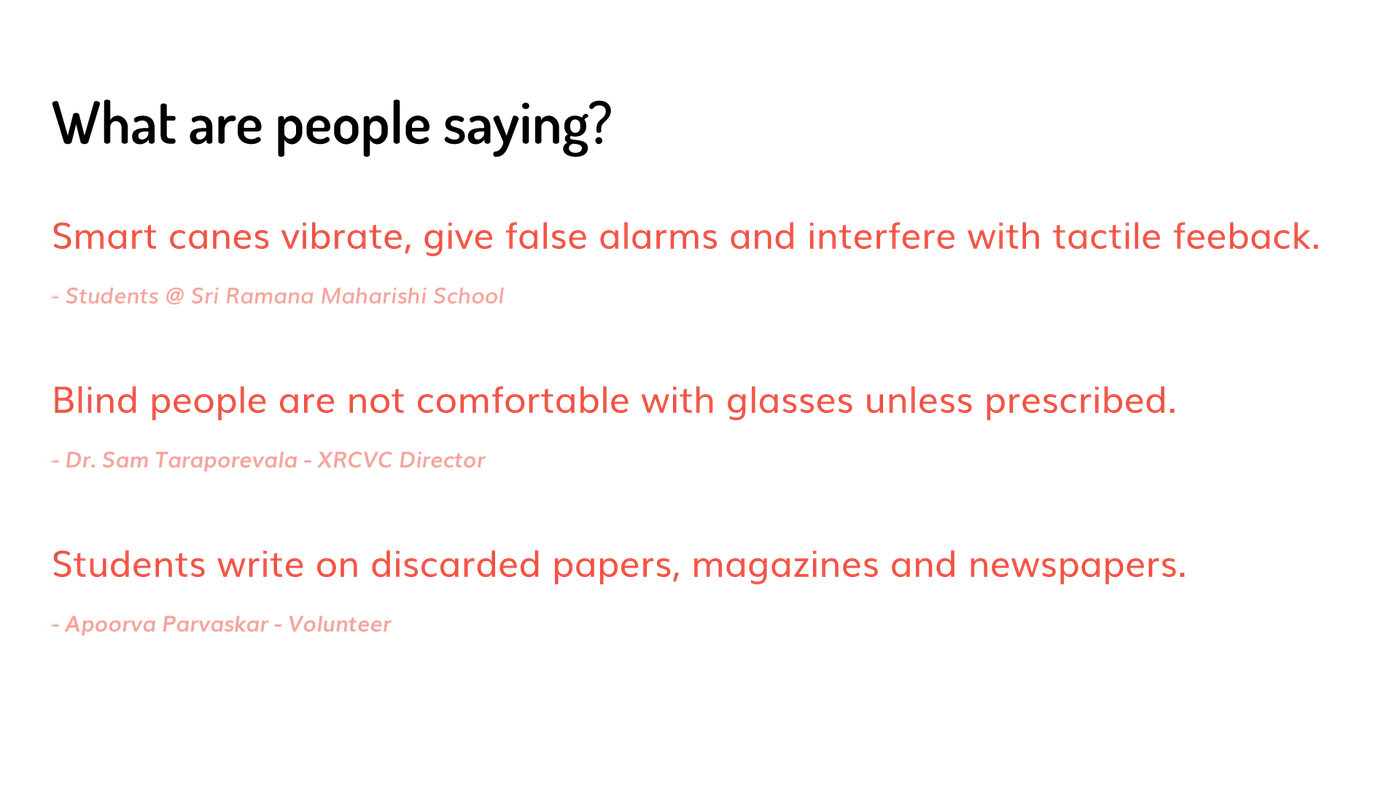
The insights that pointed there shaped everything after. Blind people move in chains, one partially sighted person leading the rest, so the answer had to be social, not only technical. A person needs about a metre of buffer to walk without fear. People stop using a cane in spaces they have memorised. And they will not wear glasses however well designed, which quietly killed every head-worn idea. The brief that fell out of it: give these teenagers better ways past obstacles on their own, and a community motivated to help.
Designing the foldable cane
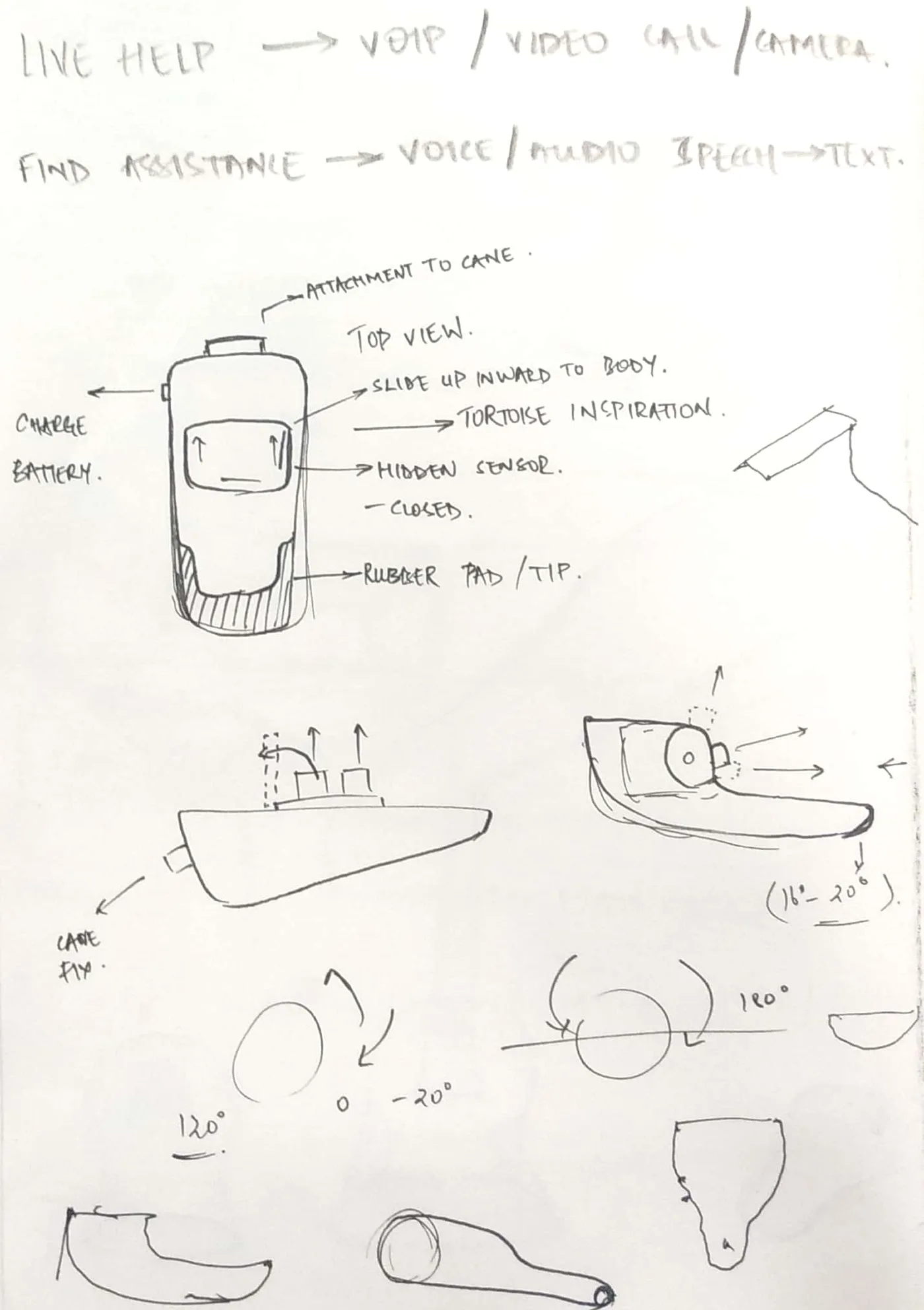
Then the project became an object. I studied cane typologies first, the short floor-gripping support cane against the long probing cane, and the family of tips that already exist: slidable, roller, pencil, marshmallow, metal guide. The cane I designed is telescopic, with three working modes: collapsed for crowds, extended for the open street, sensing for traffic. Telescopic on purpose, so it works in tight spaces and folds away when it is not needed.
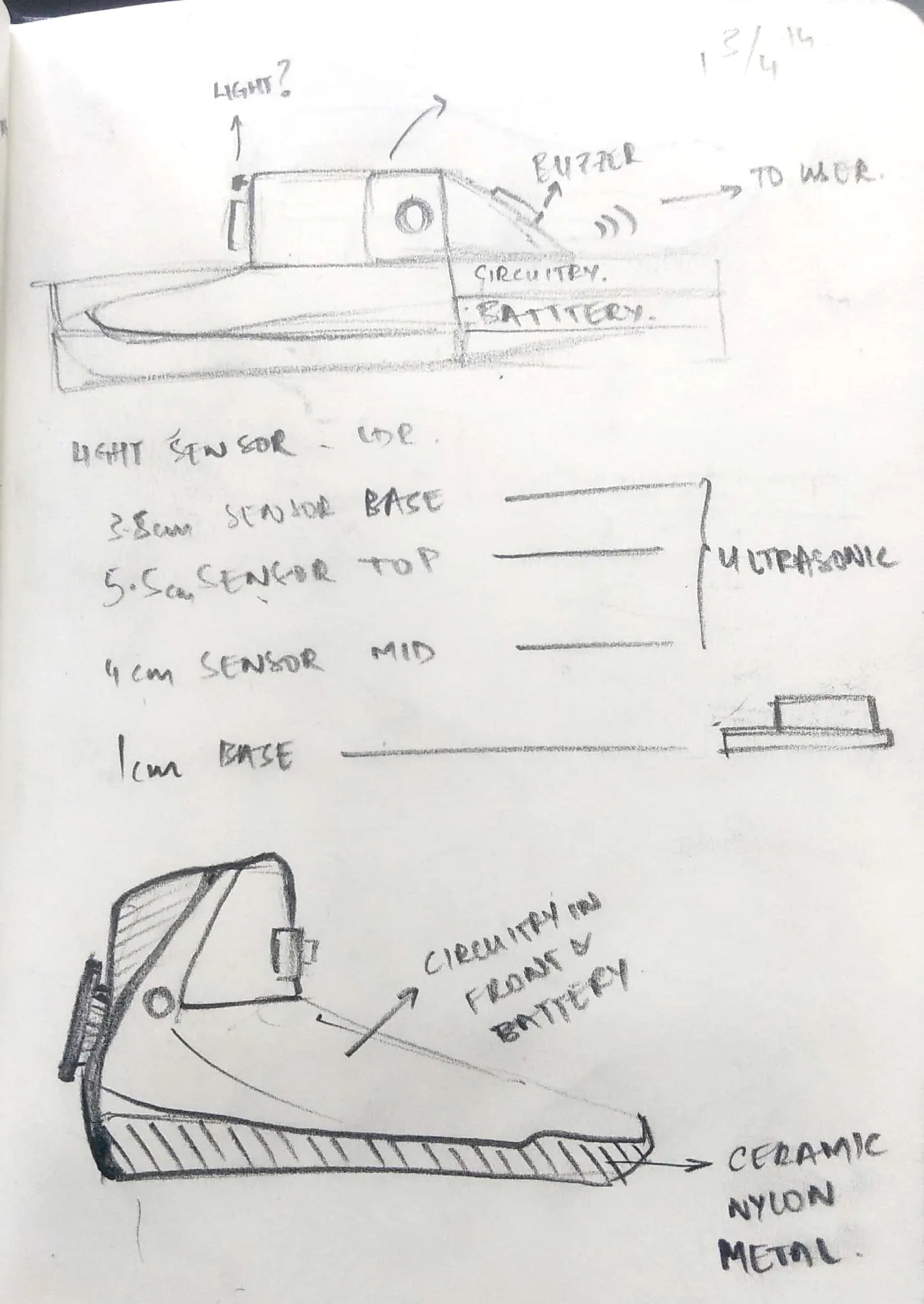
The body is a stack: a rechargeable battery at the base, a circuitry station above it, a pan-and-tilt camera in the shaft that orients itself as the user moves, and the smart tip at the working end. The tip took a tortoise as its cue, the sensor tucking in and out of a protective housing. Materials were chosen against real wear, a light polyethylene shaft, a tip explored in ceramic, nylon, and metal. Audio came back by bone conduction, so the ears stay open to the street.
A cane that senses, a network that sees
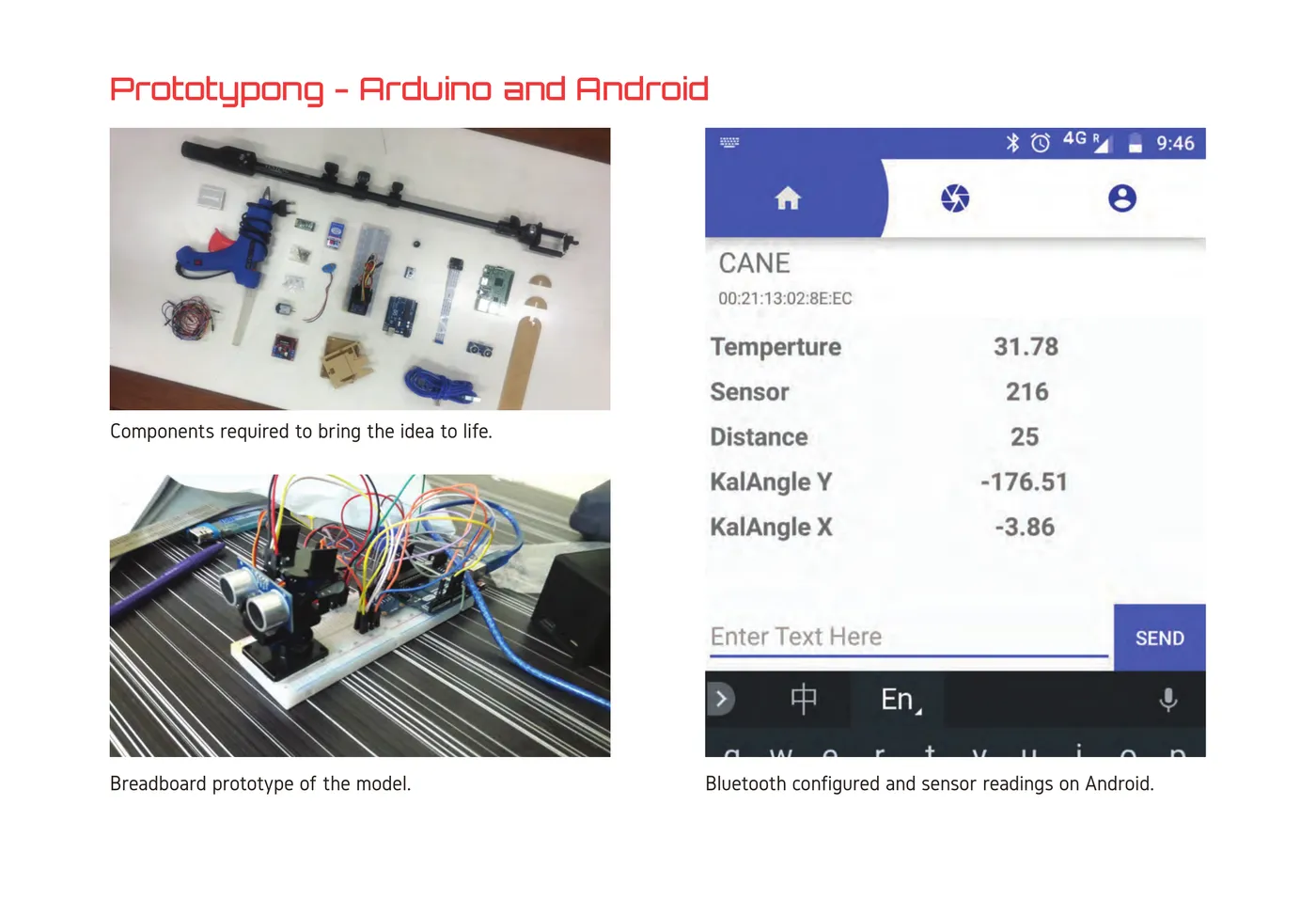
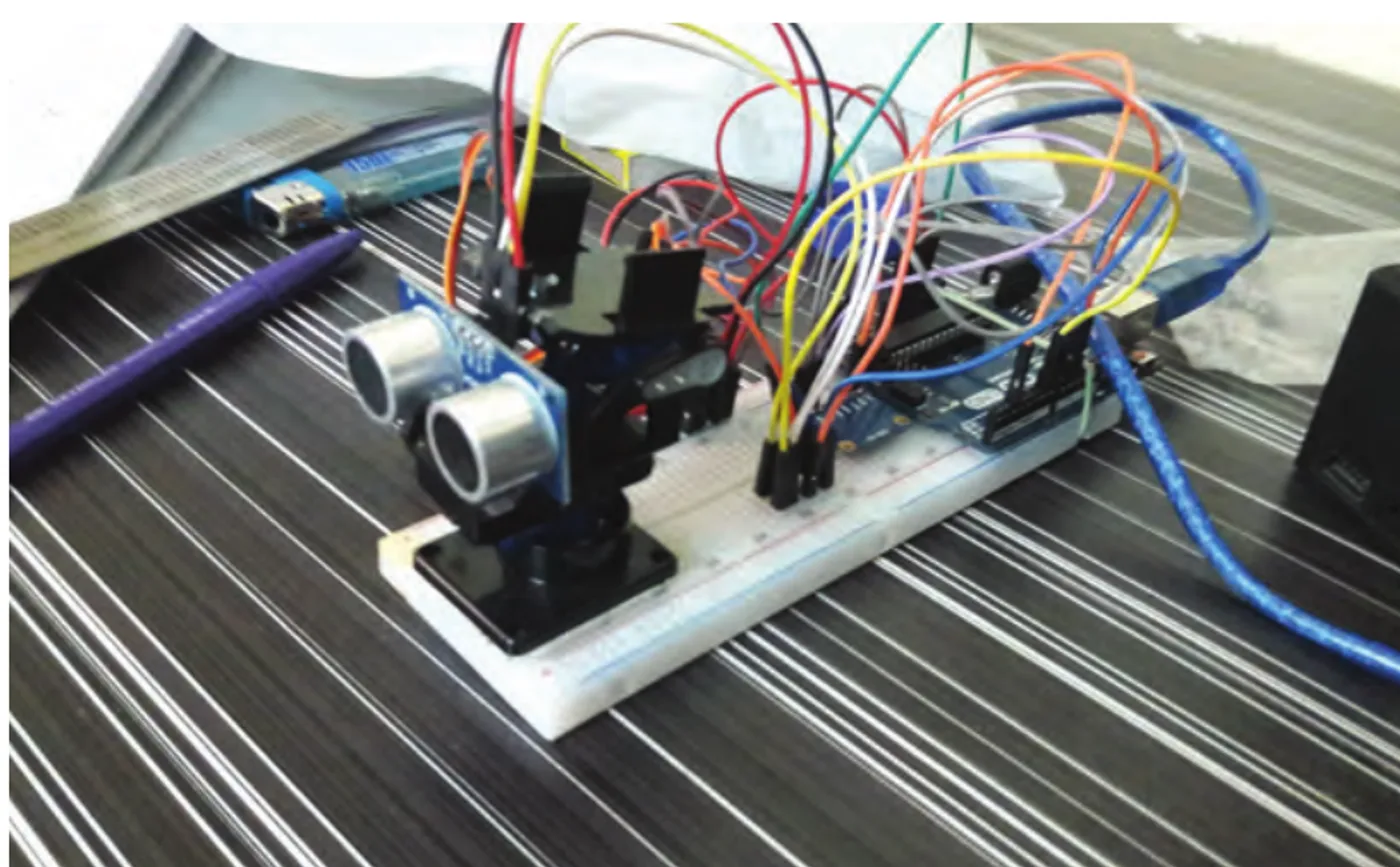
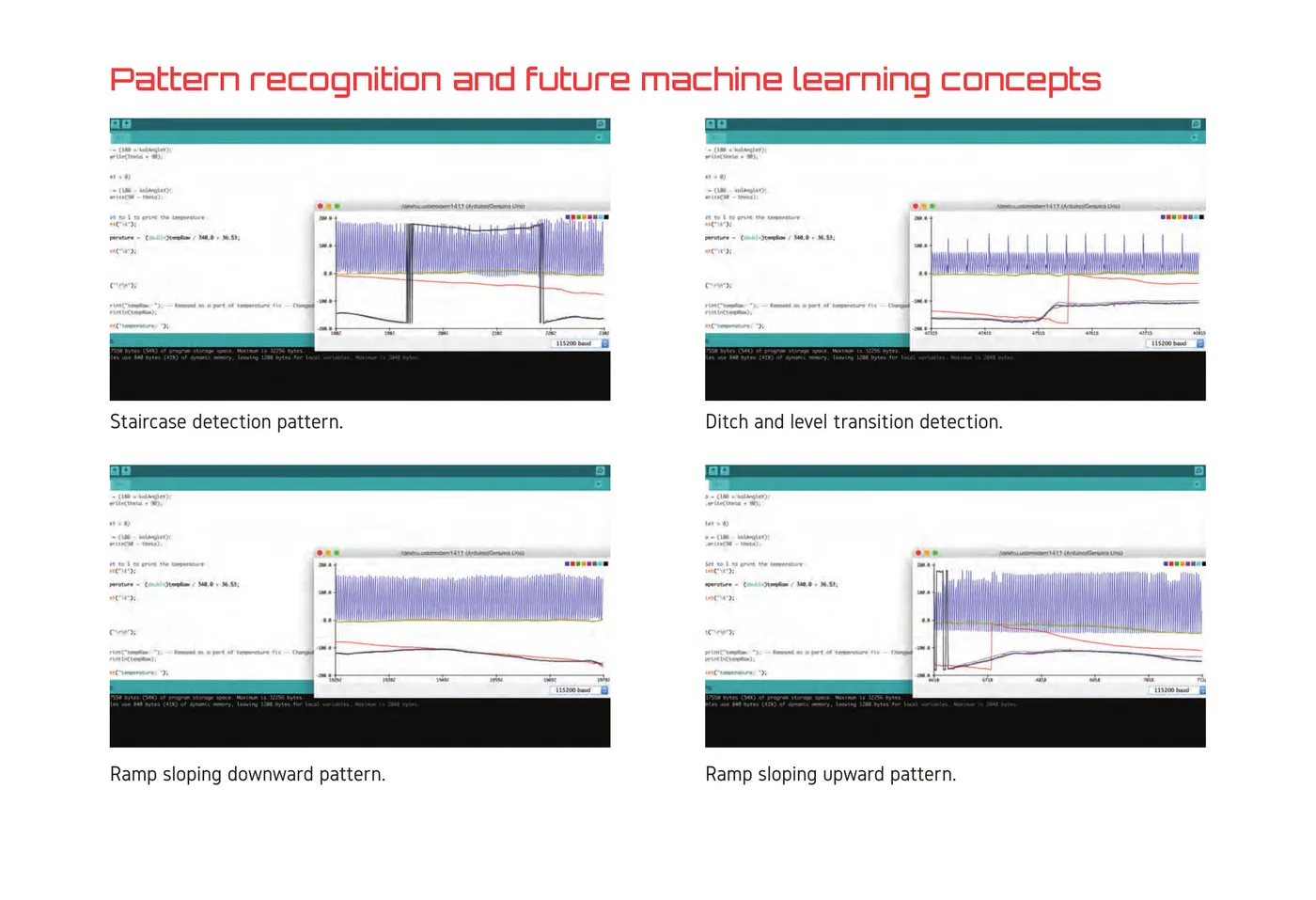
The electronics ran on Arduino: an ultrasonic ranger for distance, a gyroscope for orientation, a light sensor for unsafe low-light, a buzzer, and a Bluetooth link to the phone. The more ambitious half ran on a Raspberry Pi with a camera and open-source object detection, an on-device stick keeping the inference local, and the phone turning the cane’s stream into calm audio directions. The idea I am still fond of was pattern recognition: different terrain leaves a different signature in the sensor stream, and I mapped distinct ones for a staircase, a ramp up or down, a level change, a ditch. A cane that learns the shape of the world, not only the distance to the next thing.
The chain insight said a device alone would never be enough, so the other half of the system was human: a volunteer service where sighted people register to help, live video when a user is stuck, and a gentle bridge to eye and cornea donation. A cane that senses, and a network that sees.
Building and testing it
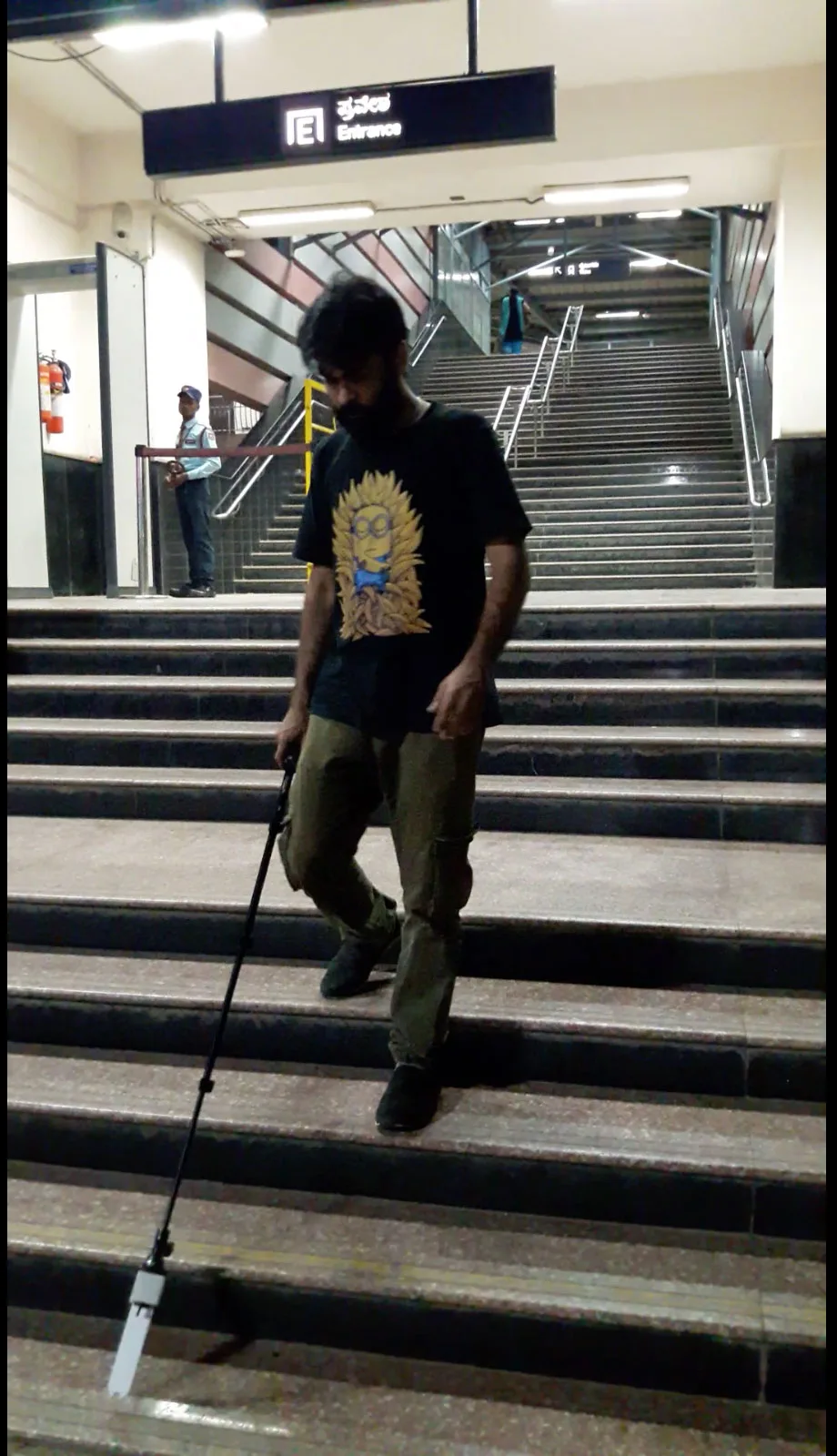
The prototype was honest about being one: a breadboard thick with wires, a repurposed telescopic monopod standing in for the shaft, readings streaming live to an Android phone. I ran empathy tasks at the institute, reaching a reading section, finding an object on a desk, getting a glass of water, then walked real routes around Yeshwantpur and the Peenya metro, logging every hazard the cane would have to catch: dripping AC vents, poles mid-footpath, faulty tactile tiles, a slope with no warning.
What it taught me
I will not dress this up. Lead was never awarded or deployed, and some of it did not survive contact: the DIY bone-conduction earphones I built and abandoned for poor sound; the pan-and-tilt camera and object detection kept honestly as version-two ambition rather than finished work. Naming the dead ends is the point, they are how a sprawling problem map narrowed to a cane, a tip, and a community that could actually be built. What it gave me is the method I still use: map the whole problem before you fall for a solution, converge on the one worth solving, then design the real thing all the way down to its materials and its failure modes. Years before I did this for a living, this is where I learned that the research is the design.