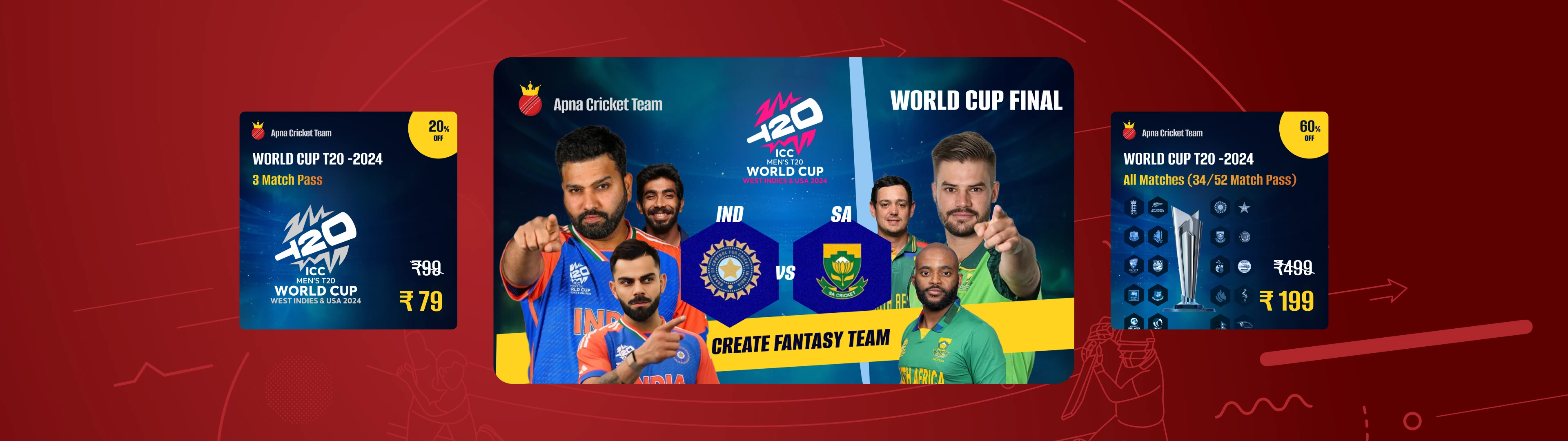
Two hours before the toss, still building a team
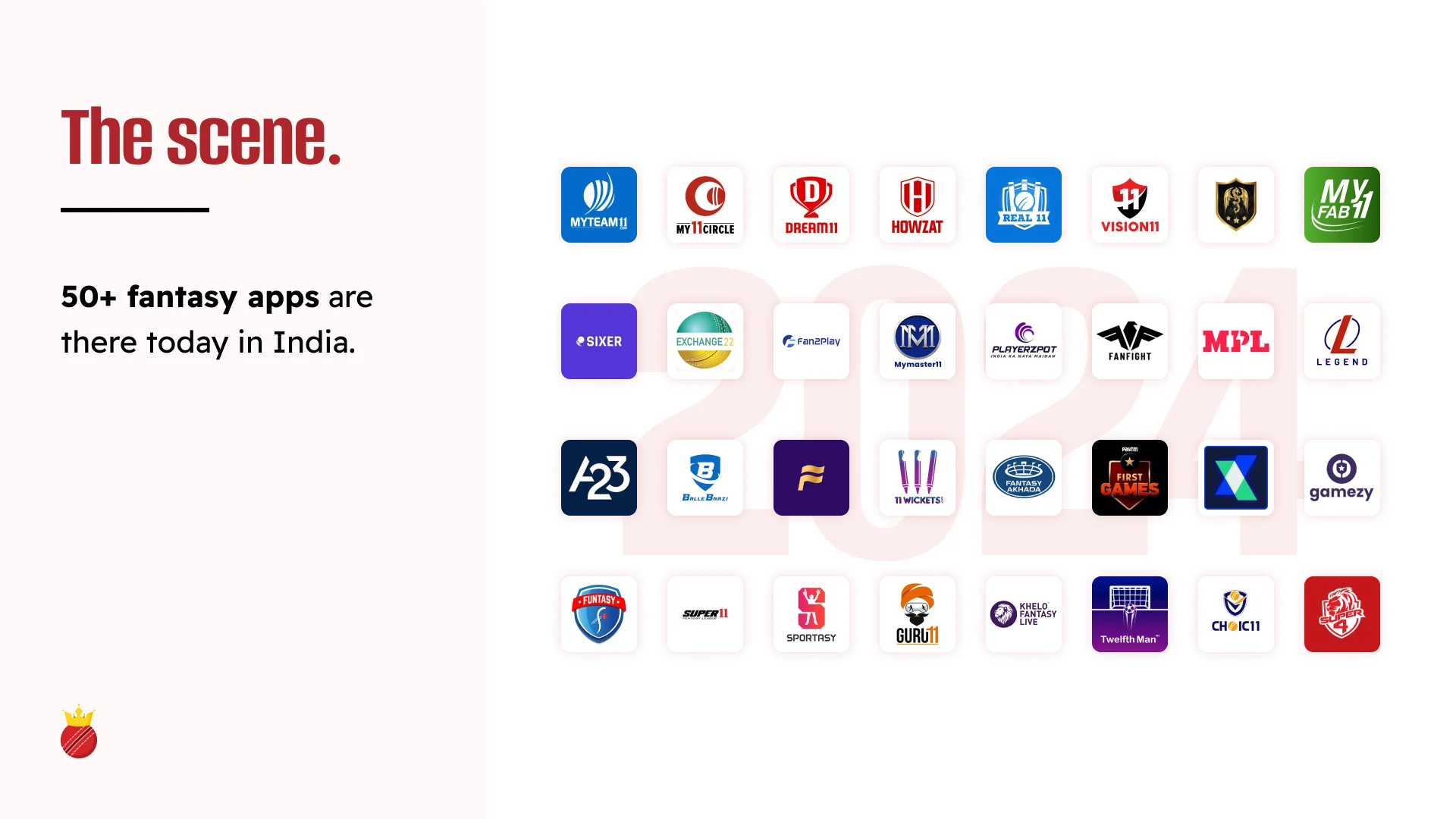
A fantasy cricket player opens his app two hours before the toss and starts building a lineup, weighing form, pitch, credits, and captaincy over and over. More than fifty fantasy apps compete for that moment in India, and almost none of them are built to help him decide. They are built to keep him spending: countdown timers tied to money, sure-shot copy, the casino register dressed as a game. Apna Cricket Team was built to sit on the other side of that line, a research companion rather than a slot machine.
The problem
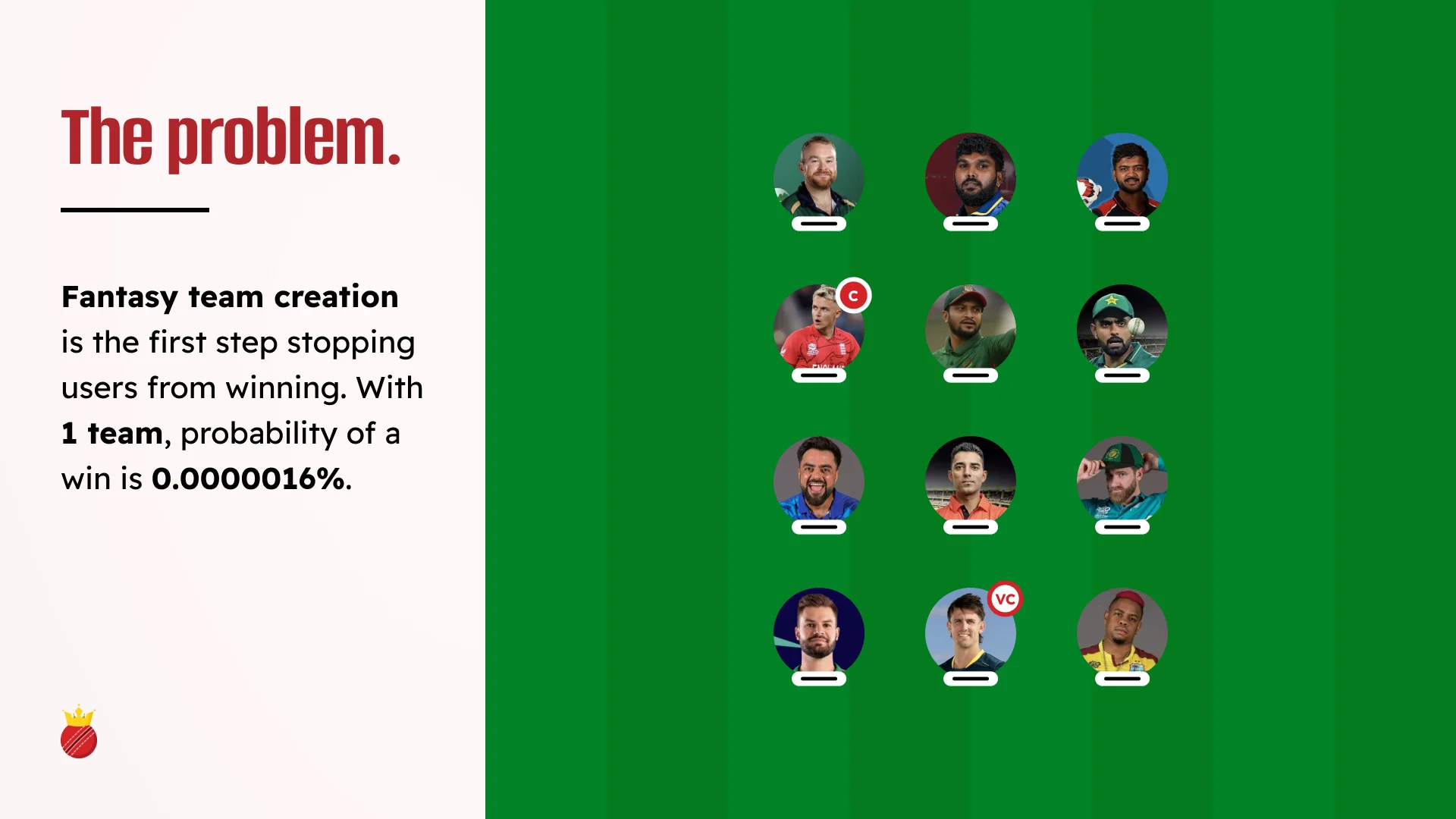
Fantasy cricket is sold as luck. It is really a research problem, and the research is where players lose. Team creation is the first step, and the odds are unforgiving: with a single team, the founding data put the probability of a win at 0.0000016 percent. So a serious player spends hours before every match, comparing form and pitch and matchups across a dozen tabs, and still walks in guessing.
The market around that player is huge and loud. India has more than 120 million fantasy players, and roughly 20 million of them are power users who play 150 to 200 matches a year and spend on the order of eight thousand rupees a season. They have plenty of apps. What they lack is a way to turn all that data into a decision they can trust. The design problem was to make analytics feel like a calm research desk.
The test I designed against
A reasonable observer watching the screen should not be able to tell whether the user is doing research or burning through a salary. That was the test, and I designed the product to pass it: flat surfaces, ranked lists, plain rationale, no countdown timers tied to spend, no sure-shot copy, and at least one decision always left with the user.
Three questions, fifteen minutes
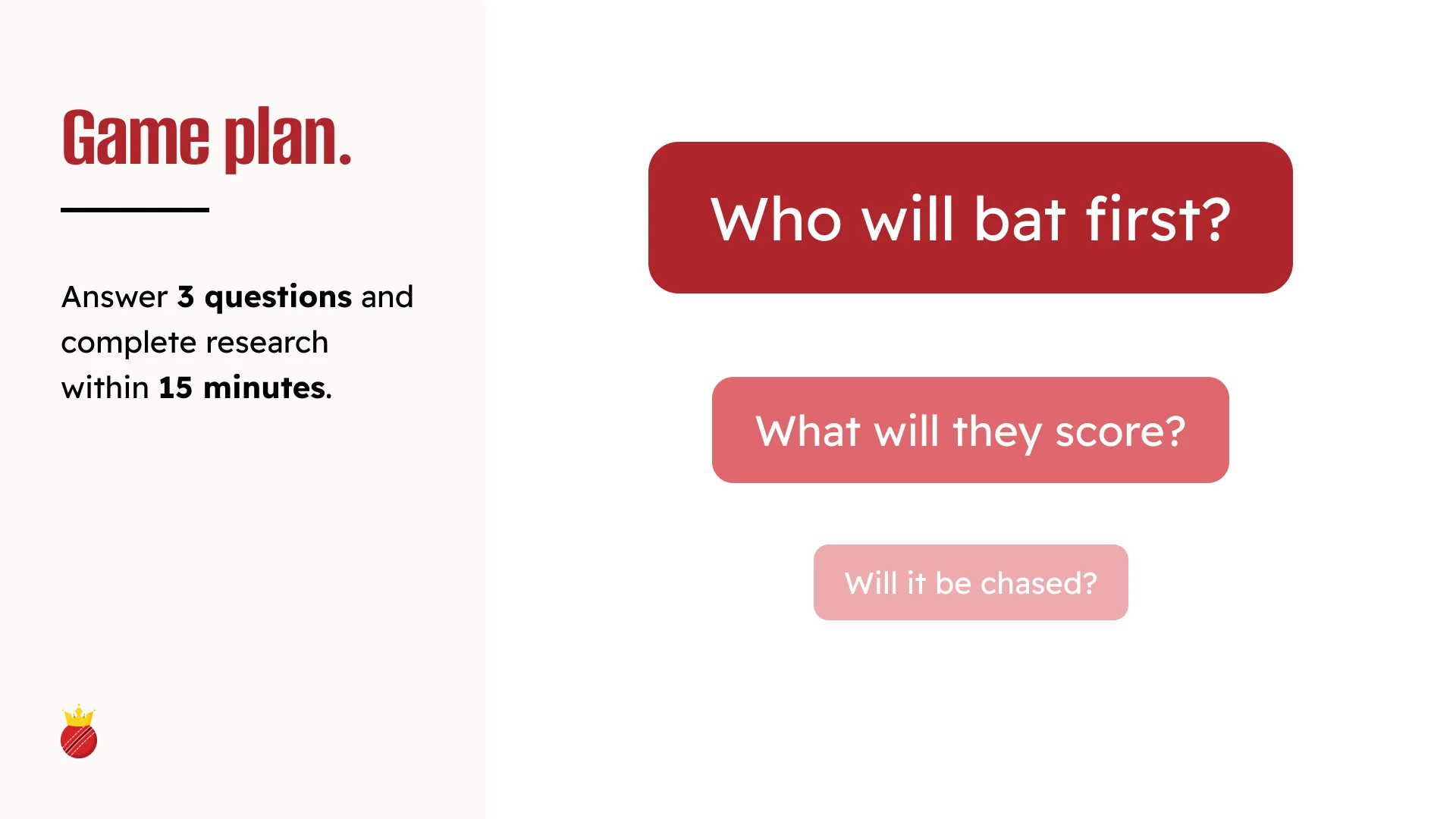
The whole product came down to answering three questions before a match, in fifteen minutes instead of two hours: who will bat first, what will they score, and will it be chased. Everything else served those.
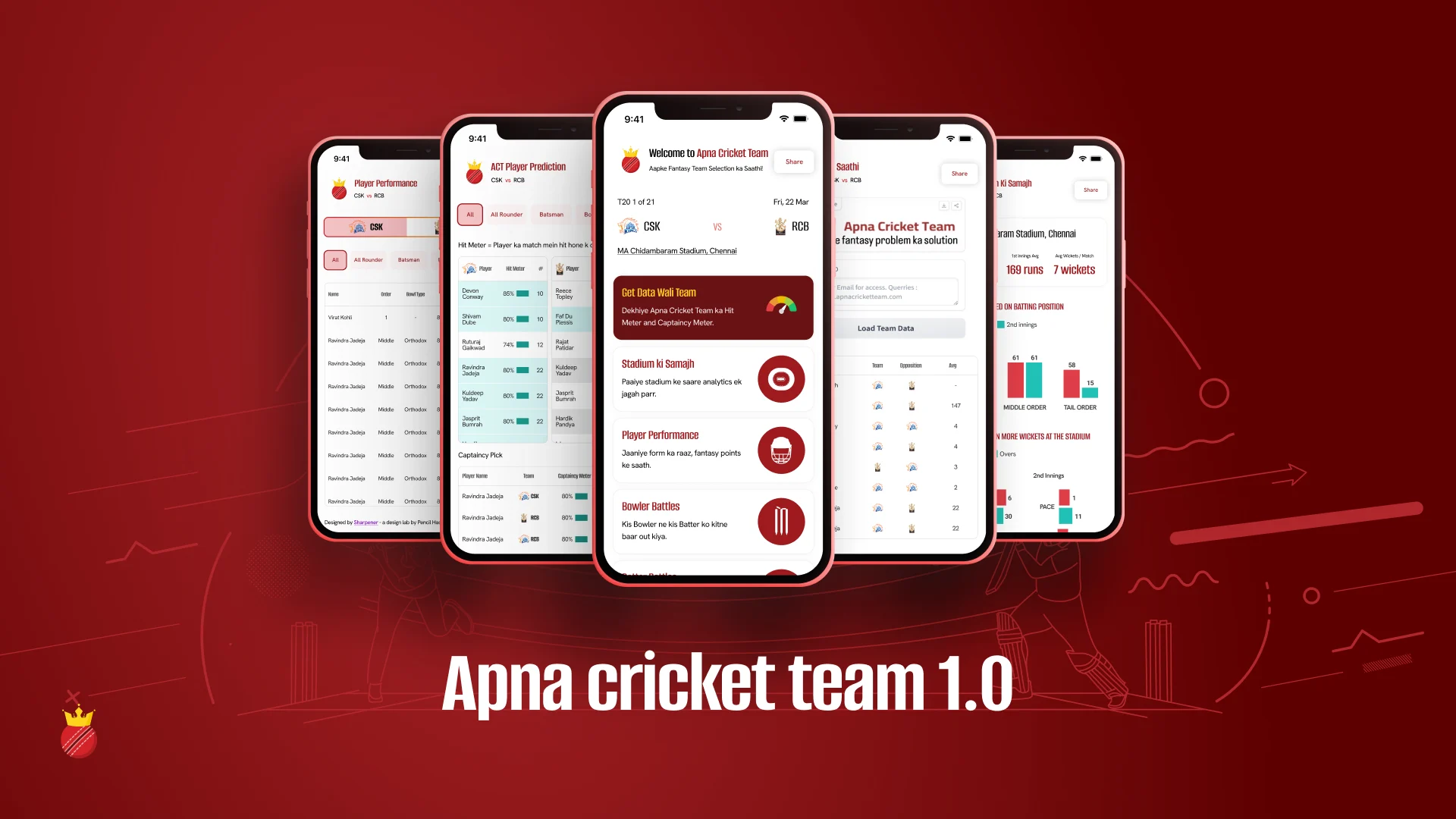
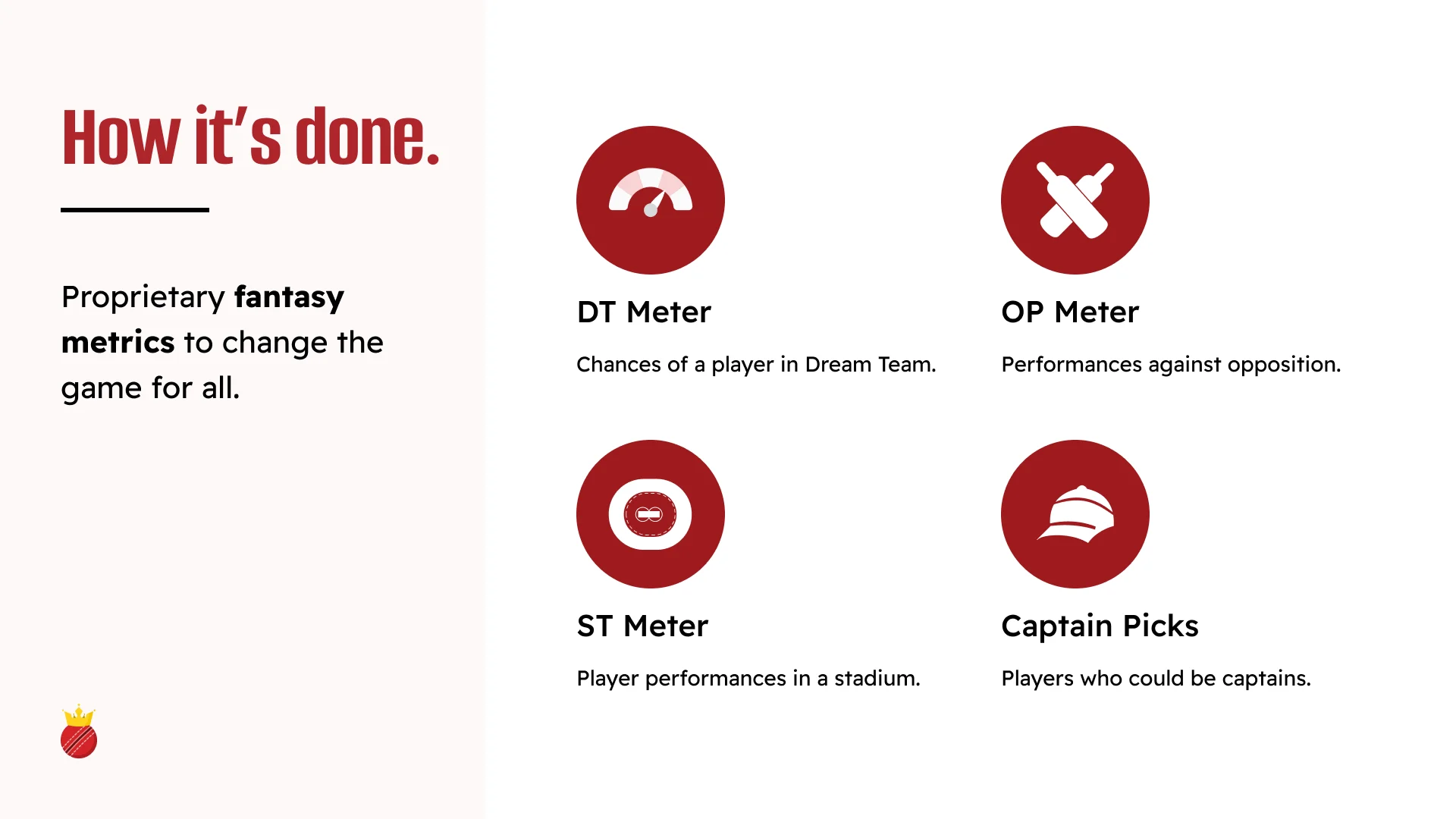
The research ran on plain-language meters rather than raw stats. A Hit Meter for a player’s chance of performing in the match. Meters for form against the opposition and at the specific stadium. Captaincy picks, called out on their own, because the captain choice swings a fantasy score more than any other. And the copy was Hinglish, the way the audience actually thinks: “Get Data Wali Team”, “Stadium Ki Samajh”, “Bowler Battles”. Analytics, in the language of the maidan.
The AI team builder took the four decisions a player agonises over, the pitch read, the squad filter, the captaincy weighting, and the credits balance, and left the final swap to him. Every insight card showed when it would expire, in balls, so the user always knew whether the answer was still live. A research companion is only useful while the research is fresh.
Shipped on Looker Studio, not an app
The fastest way to get this into players’ hands was not to build an app. ACT shipped on Looker Studio, each research pack a link a player opened on match day. That traded native polish for speed: no build cycle, no store review, no install, just a URL we could share, sell, and update between matches. It also set the design constraints. The interface was composed inside Looker Studio’s own building blocks, its tiles, filters, and scorecards, so the whole product had to be designed from what that canvas allowed. The craft was making a reporting tool feel like a calm research desk inside those limits, and using the link itself as the funnel: open a free pack, feel the value, buy the match pass. Easier to onboard, easier to sell, and honest about what two people could ship in a season.
Where it went
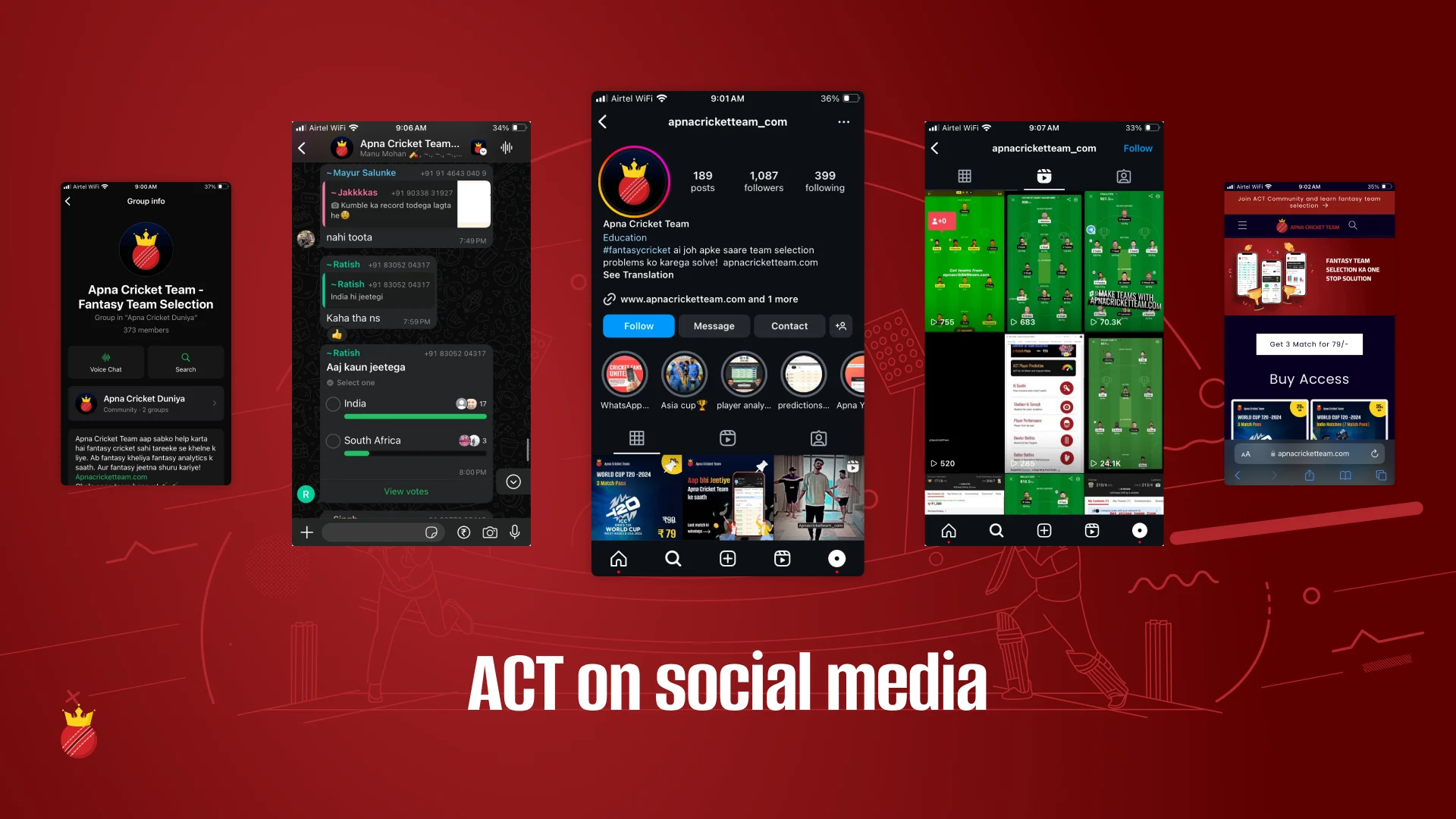
Apna Cricket Team shipped as ACT 1.0 across a season of IPL and the T20 World Cup, sold as match passes rather than a subscription. It grew a real community early: a WhatsApp group of a few hundred serious players, an Instagram audience in the low thousands, reels that reached tens of thousands. The work was selected into the Antler startup residency in 2024.
It is early, and honest about being early. What it proved is smaller and truer than any market slide. Fantasy analytics can be designed to help a person decide, calmly and on real data, without ever becoming the thing that empties his wallet.