Screens below are illustrative, from Locus’s public demo, because the real work sits under NDA. More detail on request, so get in touch.
Snapshot
Where it came from
At Locus I had built Orchestration, which let a client hand overflow orders to third-party carriers. It worked, and it exposed the bigger problem underneath. Enterprises do not want one fallback carrier. They arrive with a dozen contracts already signed and no way to run them as a single operation.
That is the product Locus needed next, on a hard deadline, and I had just left to start my studio. Locus became Sharpener Design’s first client, the first company to take a bet on us. I came back as a mentor rather than a hire, to build it through the hands of the people who would live with it after I left.
Twelve portals, one shift
The first customer, a Middle Eastern retail conglomerate, gave us the brief in one person. Their dispatcher moved between twelve carrier portals every shift, copying numbers into a spreadsheet, missing exceptions, chasing statuses nobody had centralised. Every portal had its own login, its own vocabulary, its own idea of what “delivered” meant.
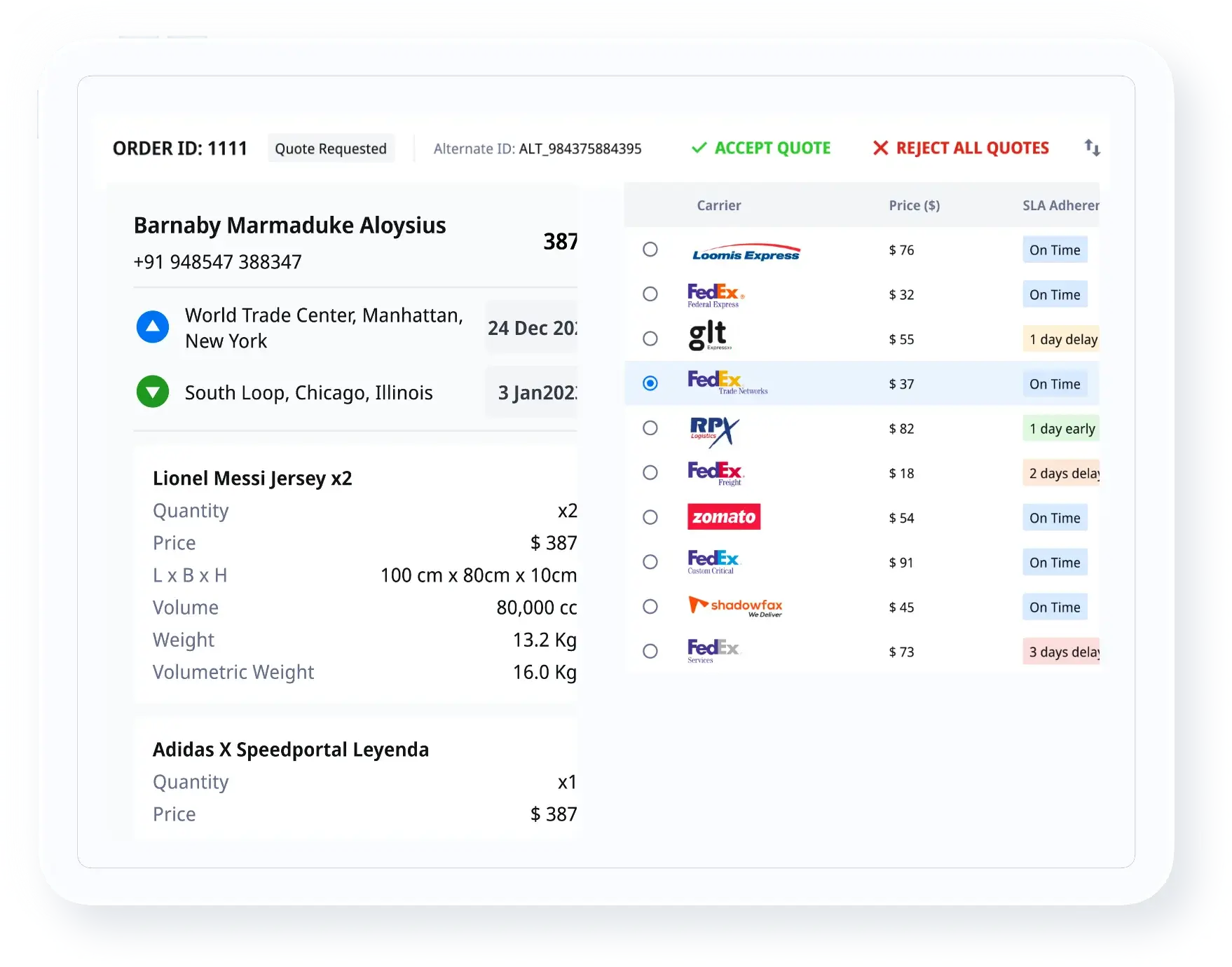
So the product had one job: put twelve carriers behind one screen, with the order and every quote against it in the same view.
Underneath it went a single four-state taxonomy, Open, Planning, Execution and Closed, with a few substates each. Every carrier’s status model mapped into that spine. A dispatcher cannot reason across twelve vocabularies, so we gave her one.
Rules instead of hands
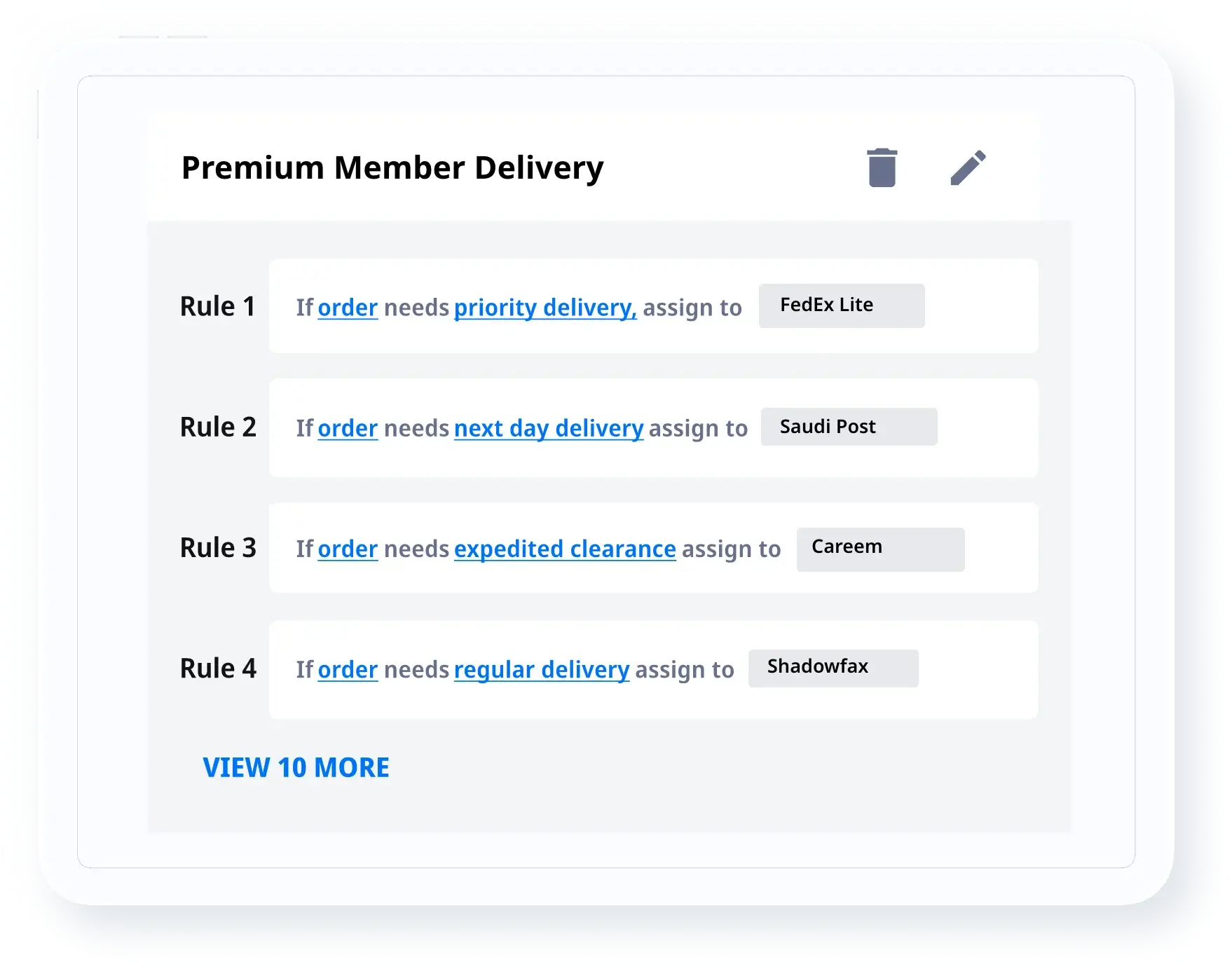
Comparing quotes by hand does not scale past the first week. The real product was the automation: a configuration layer where the business rules a company already runs on get written down once and applied to every order that arrives.
Priority orders to one carrier, next-day to another, expedited customs to a third, everything else to the cheapest that meets the SLA. This is where I spent most of my own time, working with engineering and Locus’s product director to decide what a rule could express and what it must not, because every condition we allowed was one more thing the system had to be right about.
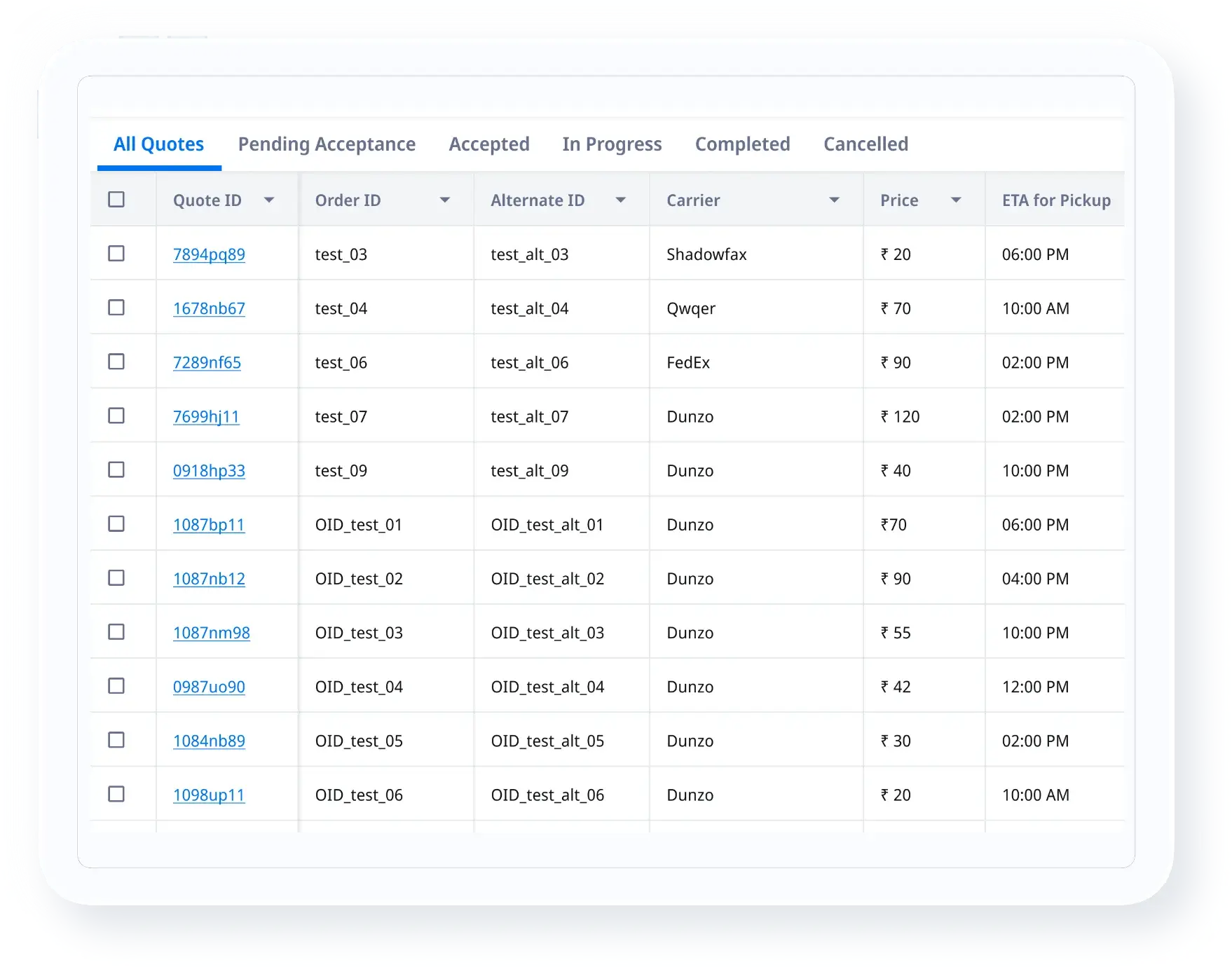
The result is that the dispatcher stops choosing carriers and starts supervising exceptions.
Built through other people
I drew very little. I redrew a lot. Five designers carried the build against about three months of design time, and my job was to hold the bar without holding the pen. The review was fast and repeatable: name the best of three options, name the weakest decision inside it, name the next artefact that would sharpen it, move on.
When the product matured and clients started onboarding, I handed it to two designers on the Locus team who had grown up in the platform, and they took it from there. That was the point of coming back as a mentor rather than a contractor.
What came of it
ShipFlex launched on 21 March 2023. By 2024 it ran over 160 carriers across thirty-plus countries, and Gartner named it a Representative Vendor in its 2024 Market Guide for Multicarrier Parcel Management Solutions. It is a Locus product, and Locus was acquired by Ingka Group, IKEA, in 2025.
Three months of design, done through other people’s hands, still standing.