Rohan Kartik
05 / 05 Let's talk
CASE STUDY · CONNECTED HARDWARE · INTERACTION DESIGN · 2015

Ryobi Phone Works

Eight analog home-improvement tools, reimagined as one connected app. My interaction-design work at the studio x cube labs on the Ryobi Phone Works system, a Core77 Design Awards honoree.

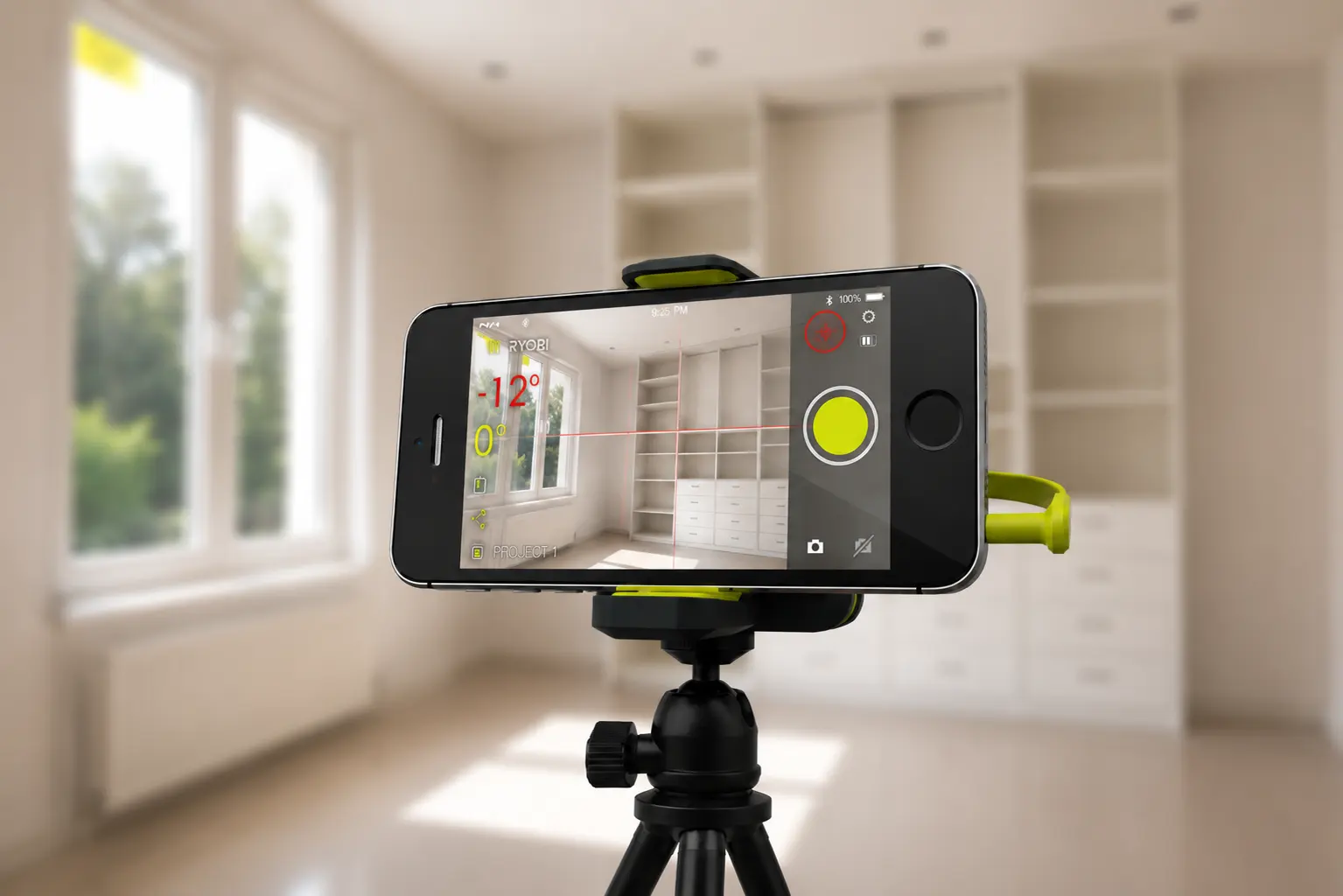
The Ryobi Phone Works app driving a connected measuring tool

The tool in your hand

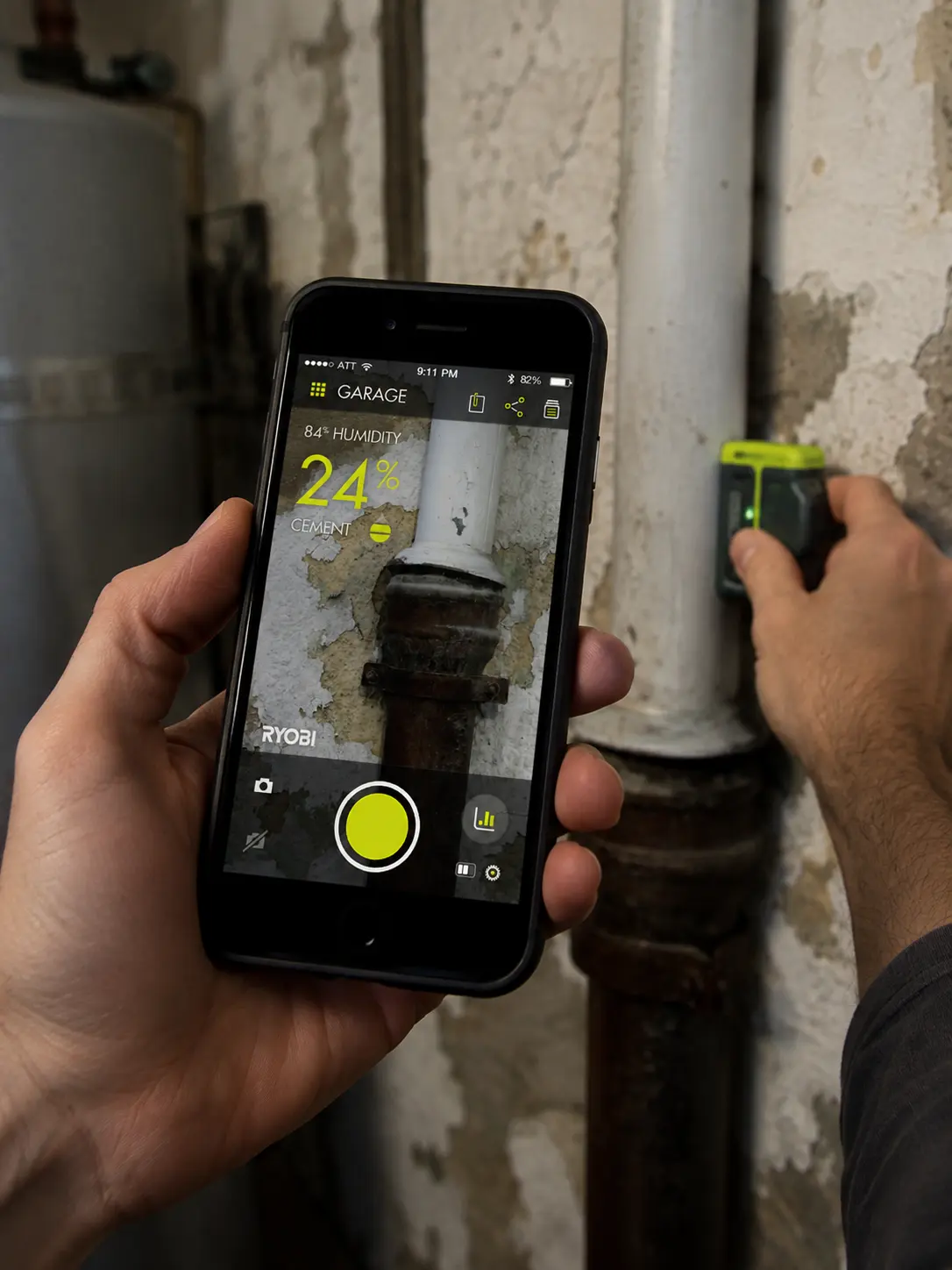
Someone is halfway through a home-improvement job, holding a moisture meter against a wall, trying to read a small analog dial and remember the number long enough to matter. The tool does one thing. It has no memory, no context, no way to tell you whether that reading is high for this room on this humid afternoon. You write it on the back of your hand and move to the next wall. Ryobi Phone Works was built for that person, by turning the phone already in their pocket into the brain of the tool.

Role
Interaction designer on the x cube labs team, for client Techtronic Industries (the Ryobi brand). Shared the interaction design of the app and its unified system across all eight tools.
Product
Ryobi Phone Works: a family of eight connected home-improvement devices paired to one iPhone and Android app.
Recognition
Core77 Design Awards 2015, Interaction category honoree. Jury: 'Brilliant utilization of the phone as a platform.'
Team
Built at x cube labs (strategy, technical lead, producer, data science, interaction design) with Techtronic Industries' product and industrial-design leads.

The problem

On site, a Ryobi Phone Works tool docks to the phone, which does the reading and the recording.

A digital replacement for an analog tool is one wrong decision away from a gimmick. If the app only mirrors a dial on a screen, you have added batteries and a pairing step and taken away reliability. So the real brief was value: use what the phone already has, its screen, sensors, camera, and radios, to make the tool genuinely more useful than the analog one it replaces, at or below the same price.

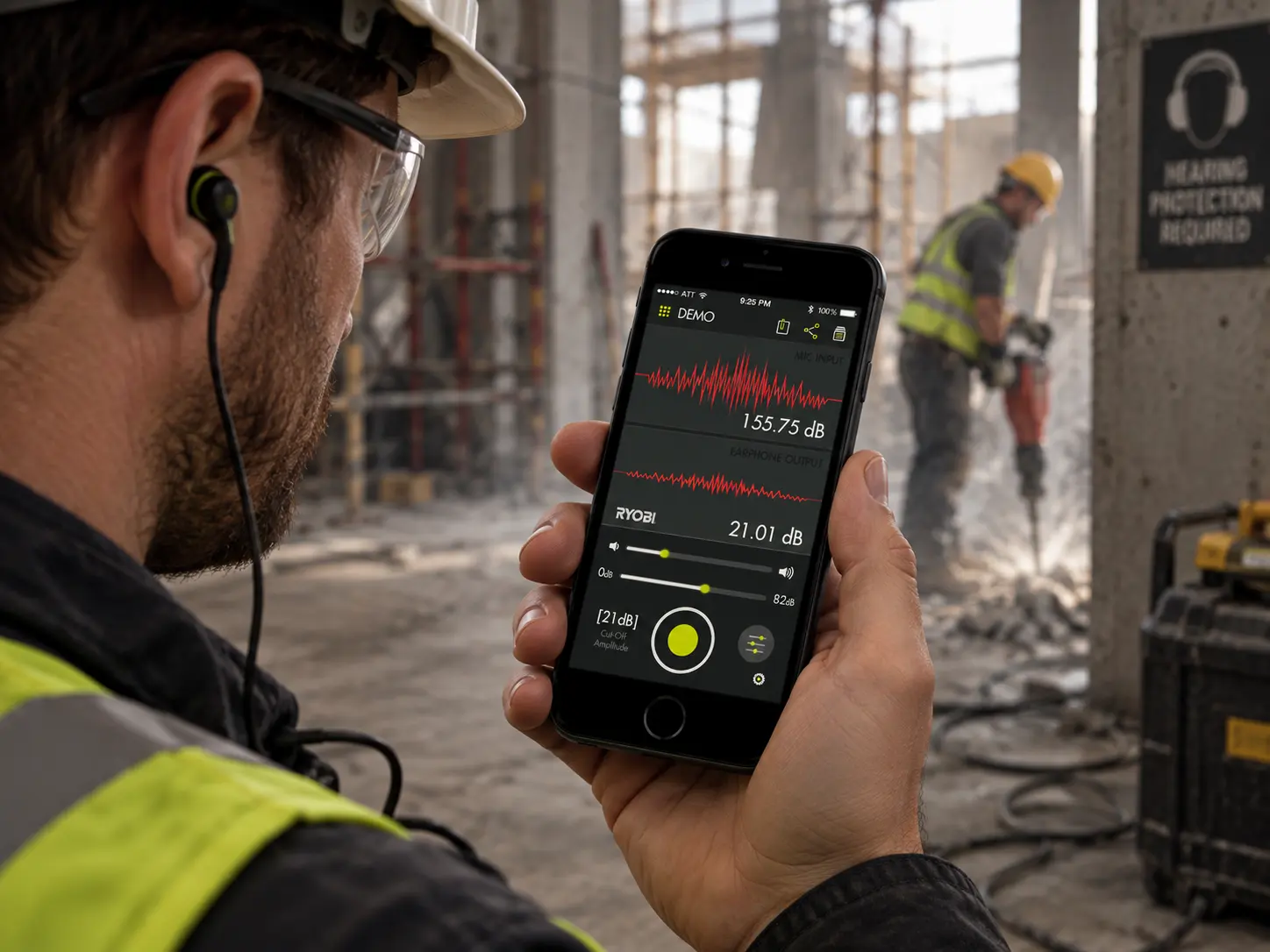
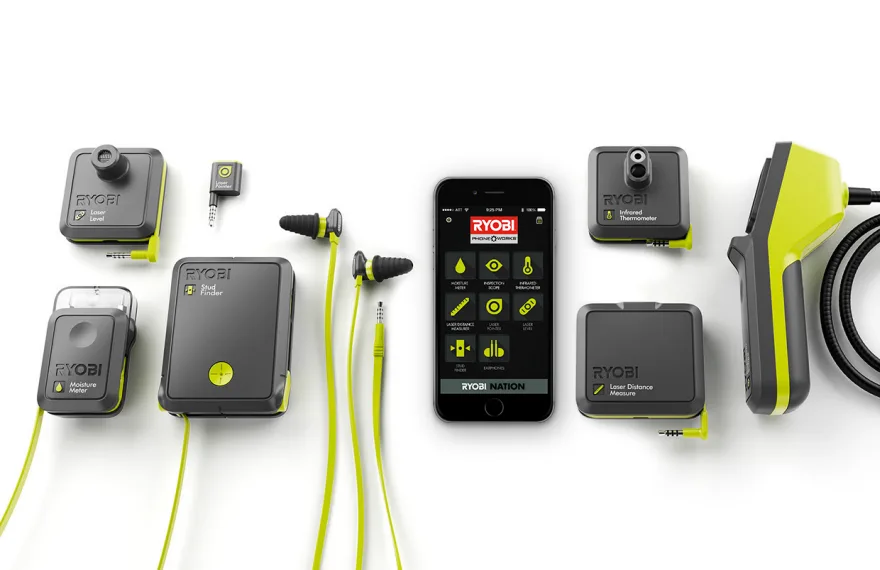
There was a second, harder problem underneath. Ryobi Phone Works was not one tool, it was eight: a moisture meter, a laser level, an inspection scope, a laser distance measurer, an infrared thermometer, a stud finder, a laser pointer, and noise-suppressing earbuds. Each carries its own decades-old expectation of how it should behave. The design job was to make each one feel native to its own use, and yet make all eight feel like a single product from a single brand.

The system

The laser distance measurer turns a raw length into area and volume, overlaid on the live camera view.

The move was to off-board the tool. By pushing the processing and the display onto the phone, the physical devices became light, compact, and streamlined, and the app picked up everything a bare tool never had: a timestamp and a location on every reading, a camera heads-up display, typed or voice notes, easy sharing, and a running archive of measurements you could actually go back to.

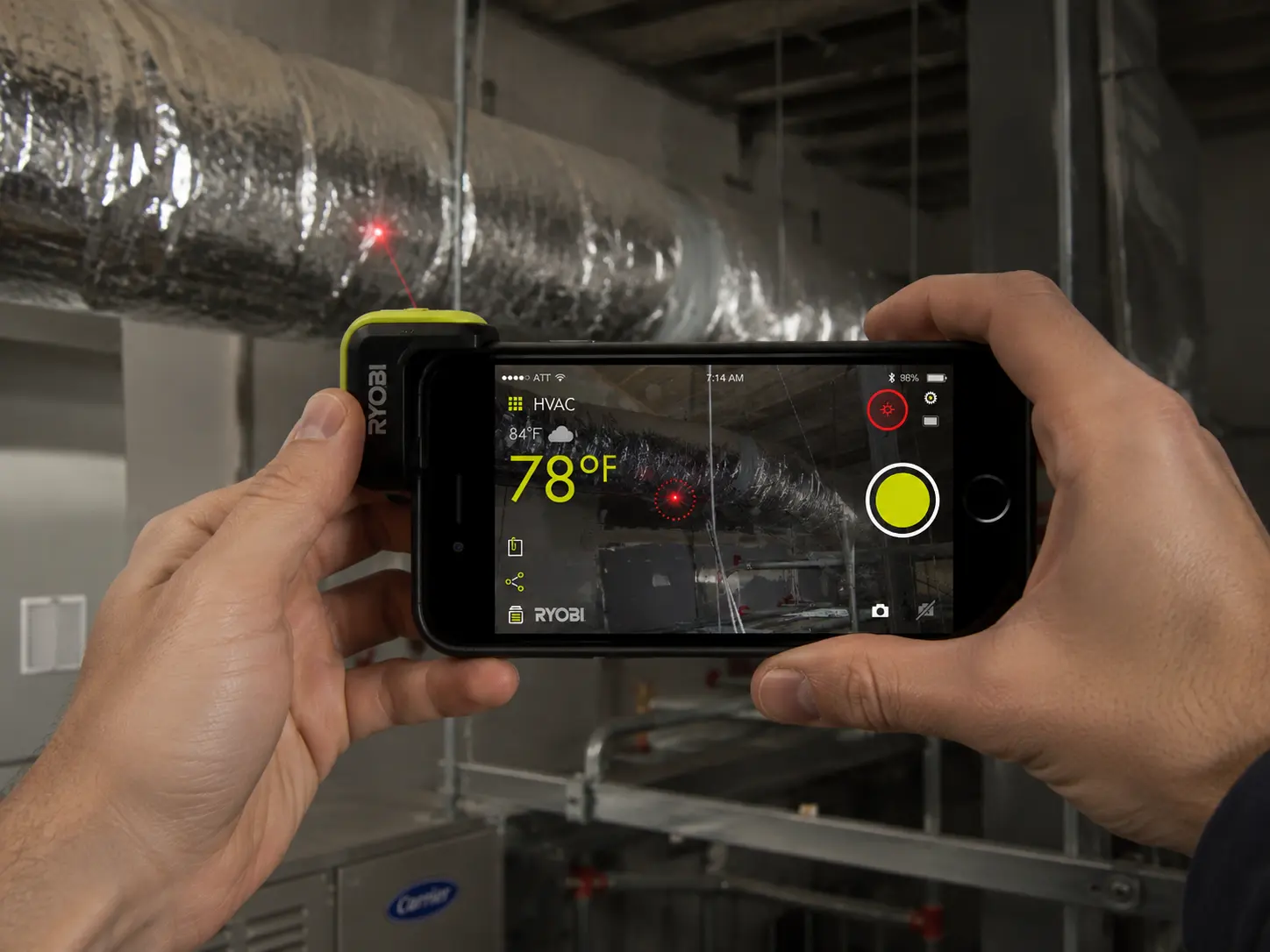
That reframed each tool. The moisture meter now showed water content against the day’s local humidity, so a number meant something. The distance measurer turned raw length into area, volume, and continuous measurement. The infrared thermometer tracked surface temperature live on a camera HUD. The inspection scope streamed from behind a wall to the screen in your hand. Same measurement, far more context.

The design work

The Ryobi Phone Works app home: one tool grid for all eight connected devices.
One home screen for all eight tools, the shared UI language in a single view.

My part sat in the interaction layer, and specifically in the hardest requirement: one UI language across all eight tools. Every screen had to be immediately legible for its own tool, and consistent enough across the set that learning one taught you the next. Shared structure, shared patterns for a live reading, a capture, a saved record, so the app read as one considered product rather than eight utilities bolted together, while still feeling like part of the Ryobi hardware family it belonged to.

The thesis we kept returning to was intimacy. The phone is the device people keep closest, and attaching a tool and a task to it deepens the relationship with that task. Getting that right meant merging the digital interface with the industrial design, honouring the analog legacy each tool came from instead of erasing it.

What it taught me

Ryobi Phone Works was recognised by Core77 in 2015, and I want to be precise about that: it was a team’s work at x cube labs for Techtronic Industries, and I was one of its interaction designers. What it taught me has stayed with every connected-hardware project since. When a product is a system of many parts, the design job is not the prettiest screen, it is the shared language that lets all the parts feel like one thing in the user’s hands.